Mold Risks in Beachside Condos
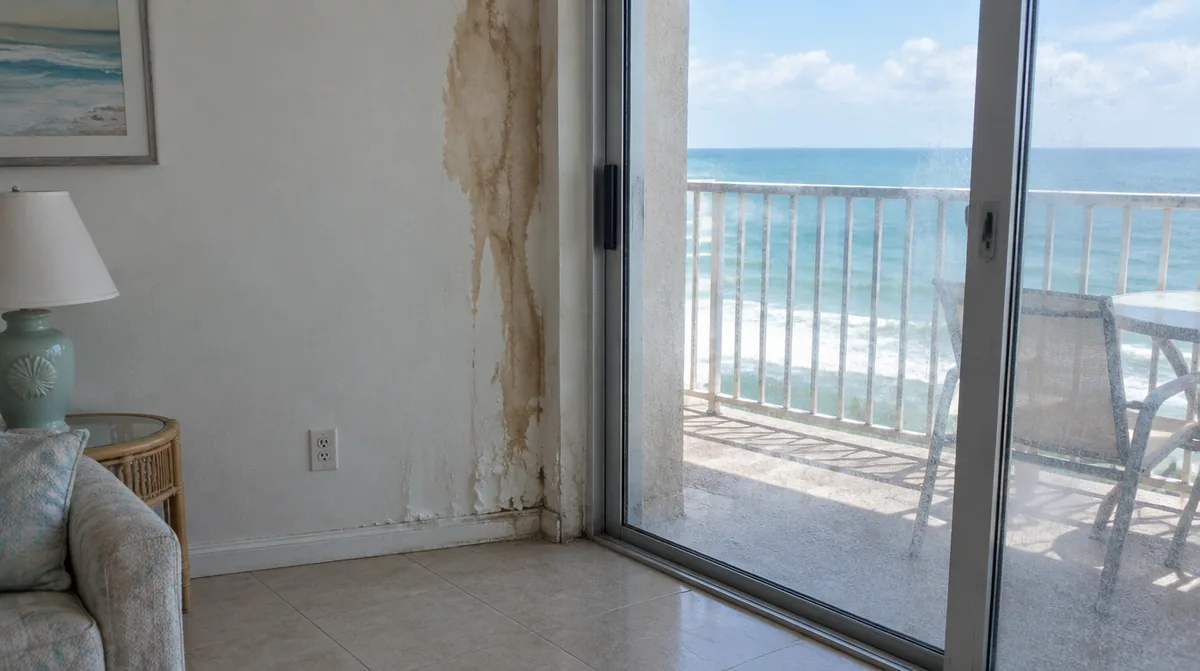
Living a short walk from the ocean has obvious perks. It also puts your home in constant contact with salty, humid air and wind-driven rain. Condos add another layer, because your walls, ceilings and pipes are shared with other people.
Here is where mold tends to start in beachside units and how to protect your health while you deal with it.
Sliding Doors and Balconies
Onshore winds push rain sideways. Older sliders and window frames can let water past worn seals and weep holes clogged with sand or salt crust. The water runs down inside the wall or under the flooring by the door.
Balcony slabs can also slope the wrong way or have failed waterproofing, letting water travel into the unit below. Watch for swelling baseboards, lifting tile and stains at the bottom of walls near the balcony.
Shared Walls and Stacked Plumbing
A leak in the unit above or next door can soak your ceiling or wall long before anyone notices. Plumbing stacks, washing machine lines and AC drains are common culprits.
Who handles what
Your condo documents usually spell out which parts belong to the association and which belong to owners. Report leaks in writing to the association and your neighbour quickly. Mold that crosses unit lines is easier to solve when everyone acts early.
The AC Closet
Most coastal condos rely on an air handler in a small closet. That closet holds a cold coil, a drain pan and a drain line. If the line clogs, water backs up onto the floor and walls. If the closet door is louvred and the space is humid, the coil cabinet and duct connections can grow mold that the system then blows through the unit.
Units Left Closed Up
Many units sit empty for part of the year. When power or the AC is set too high or turned off, humidity climbs fast. Furniture, closets and mattresses can all show growth by the time the owner returns. A unit that smells musty on arrival is telling you something.
Staying Safe When You Find It
Mold can irritate the nose, throat, eyes and lungs, especially in people with asthma or allergies. A few safety steps matter:
- Don't run fans pointed at the moldy area. They spread spores through the unit.
- Avoid dry scraping or brushing growth.
- Wear an N95-style mask and gloves if you must go near it.
- Keep children, older relatives and pets away from the affected rooms.
- Don't use bleach on porous surfaces. It doesn't reach growth inside the material and adds fumes to a small space.
What Lauderdale-by-the-Sea Owners Should Know
In Lauderdale-by-the-Sea, many residences are older concrete condo buildings near the beach, plus converted low-rise properties and small homes toward the Intracoastal. Salt air, sideways rain and storm tides all push moisture at these buildings. If you own here, our page on mold removal in Lauderdale-by-the-Sea describes how coastal units are inspected and treated.
The best defence is simple: keep the AC running at a sensible setting, check seals around doors each season and report any leak the day you see it.
Signs to Check in Your Unit
A short walk-through each season catches most problems early.
- Run your hand along the wall below each window and slider. Feel for softness or cool, damp spots.
- Look up at ceilings, especially in bathrooms and the kitchen, for rings or bubbling paint.
- Open the AC closet and check that the floor and drain pan are dry.
- Look behind the toilet and under every sink.
- Sniff closets on outside walls.
Bathrooms Without Windows
Many condo bathrooms are interior rooms with only an exhaust fan. If the fan is weak or vents into a shared shaft that doesn't move air well, steam lingers. Ceiling corners and the area above the shower are common spots for growth. Running the fan longer after showers and cleaning its grille helps.
After a Storm
When a tropical system passes, check your unit even if it looks fine at first glance. Water can sit under tile or inside walls for days before showing. Lift a corner of rugs near the balcony door, check the base of walls and look at the slider track. If the building lost power, see whether the AC came back on.
Working With Your Association
Keep notes and photos with dates. Share them with the manager in writing. Ask whether the building has had similar reports from other units nearby, since a pattern can point to a common source like a riser or balcony waterproofing.