Black Mold Removal in Wilton Manors, FL
Black mold removal in Wilton Manors is about the water behind the stain, because dark mold almost always means a material has stayed wet for a long time.
Book Inspection(754) 239-5777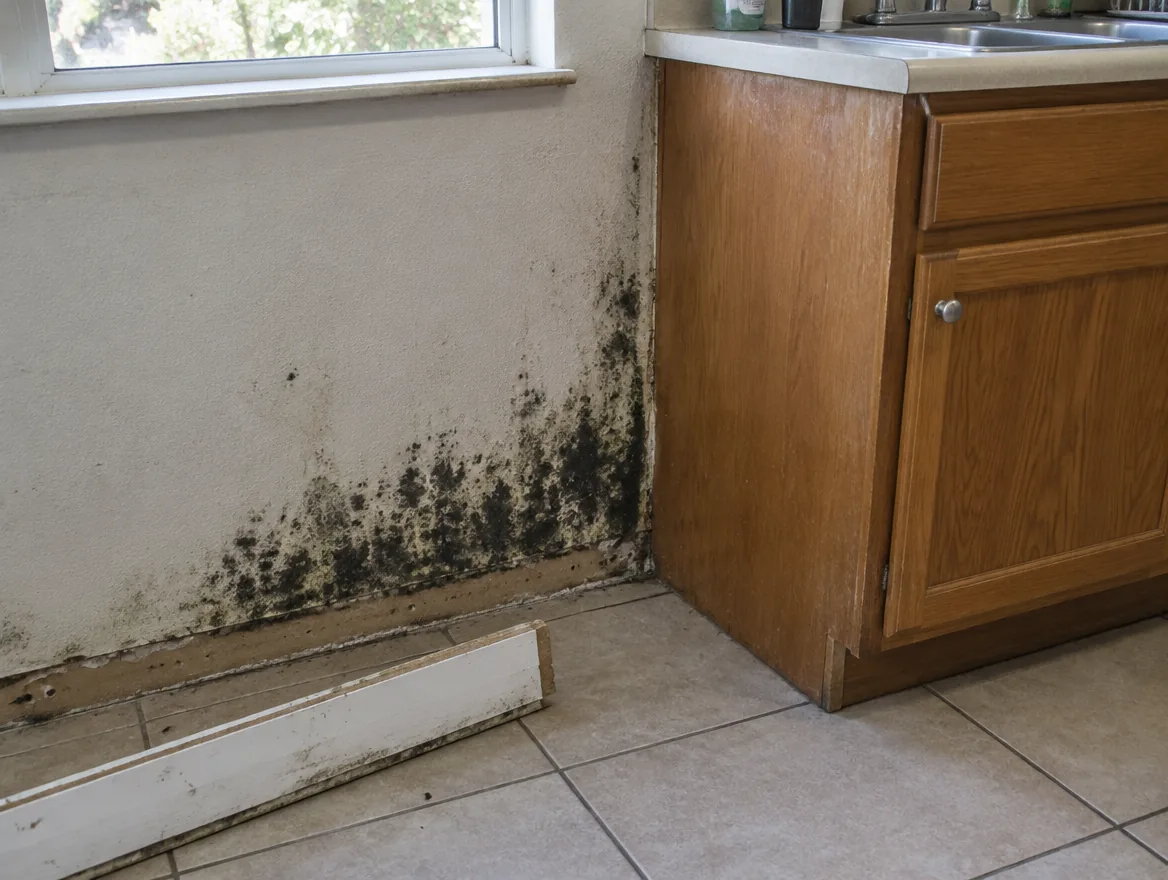
Black mold removal for Wilton Manors homes
"Black mold" is the name most people use for dark green or black growth, often linked to Stachybotrys. That type tends to grow on drywall paper, ceiling tiles and wood that have been soaked for a while, not just damp for a day. The color alone does not tell you the species, and testing is the only way to know.
What matters more for your home is the cause. Dark growth on a wall or ceiling usually means a leak, a flood or a slow drip that went unnoticed. Removing it safely means containing the area, cutting out what is damaged and drying the structure.
What black mold usually looks like
It often shows up as slimy or sooty black patches, sometimes with a greenish tint. It tends to appear in a cluster rather than as scattered dots. You may see it along the bottom of a wall after a leak, on the ceiling under a bathroom, around a water heater closet, or on the back of drywall once a baseboard is pulled. A strong, earthy smell near one area is another clue, even when nothing is visible yet.
Why it grows
The dark molds people call black mold need material that stays wet, not just humid air. In local homes that usually means a supply line leak under a sink, a slow toilet seal leak, a flooded floor from a storm, or an AC drain pan that overflowed into a wall. Drywall and paper-faced products are an easy food source. When the leak sits for weeks, growth can spread across the back of a wall long before the front shows a stain.
Deciding on black mold removal
Confirming what it is and how far it goes
We start by finding the wet area with a moisture meter and checking how far the dampness spreads past the visible stain. Sometimes a small cut near the baseboard shows whether growth continues inside the wall. If you want to know the exact species, a lab test on a surface sample can tell you. For the removal plan, though, the extent of the wet and damaged material matters more than the name of the mold.
What to expect on removal day
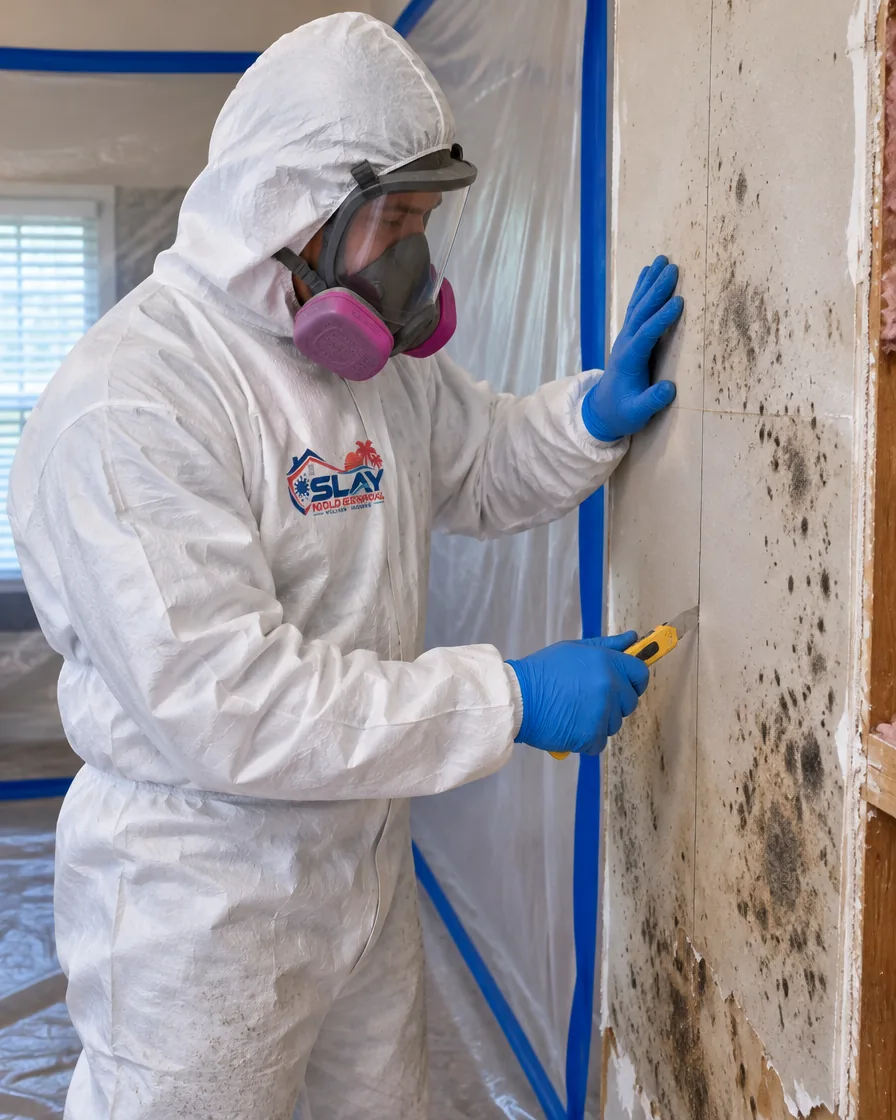
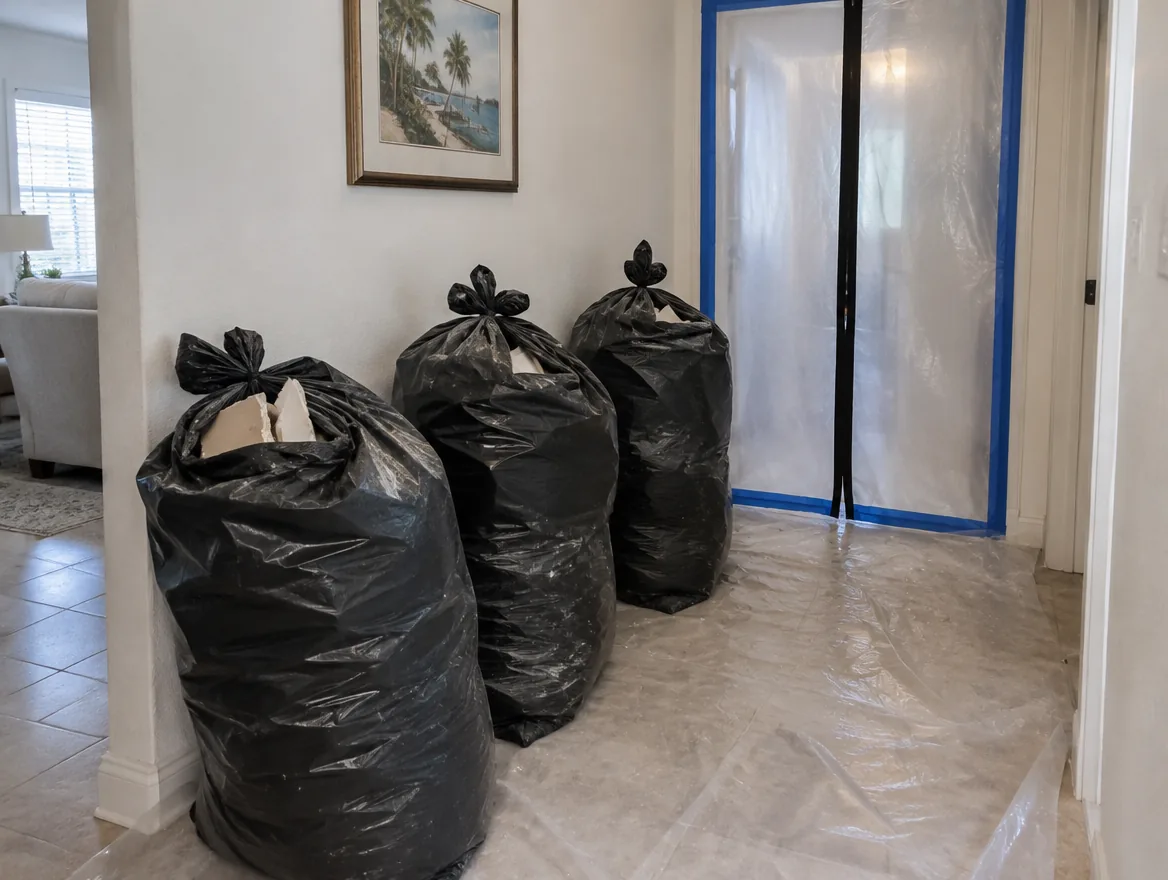
Expect plastic walls and a zipper door around the work area, plus an air scrubber running steadily. The crew will cover nearby floors, shut off or seal the HVAC vents in that space, and bag every piece of material before it leaves. There will be some noise from cutting and vacuuming. Once the removal is done, drying equipment usually stays in place until moisture readings come back to normal.
Why drywall usually comes out
Dark growth on drywall usually goes into the paper and the gypsum, so it cannot be cleaned to a safe result. The standard approach is to cut the drywall out a bit past the damaged area, bag it inside containment and remove it. Insulation that got wet comes out too. Studs, furring strips and block behind the wall are then cleaned, dried and checked before new drywall goes in.
What changes the cost
The total area of damaged drywall, ceiling or flooring is the biggest factor. Growth hidden inside a wall cavity means more opening and more cleanup. A ceiling under a bathroom takes more setup than a lower wall section. The length of drying time, whether cabinets or vanities must be pulled to reach the growth, and how tight the space is all affect the work. Repairs to the leak and the rebuild afterward are usually priced separately.
Why you should not scrub it yourself
Scrubbing or sanding dark mold sends spores and fragments into the air, and a household fan can carry them into other rooms. Bleach does not reach into drywall and adds more moisture. Proper removal uses containment, negative air pressure, HEPA filtration and respirators. If anyone in the home has asthma, allergies or a health condition, it is wise to keep them away from the area and talk with a doctor about any symptoms.
How we remove black mold
Locate the leak
We find the water that fed the growth and confirm it has stopped or is being repaired.
Seal the area
Plastic containment and a HEPA air scrubber keep spores inside the work zone.
Cut out damaged material
Stained drywall, wet insulation and swollen trim are removed past the edge of the damage and bagged on site.
Clean the structure
Framing and block are HEPA vacuumed and wiped, then treated where it helps.
Dry and verify
Equipment runs until readings are normal, and we check the area before it is closed up.
Black Mold Removal questions
- Is all black-looking mold Stachybotrys?
- No. Many common molds look dark green or black, including types that grow on shower grout. Color is not a reliable way to identify mold. A lab test of a sample is the only way to know the species, though the removal steps are similar either way.
- How fast can black mold grow after a leak?
- Common molds can start growing within a day or two on wet material. The dark types people call black mold usually need longer and wetter conditions. That is why quick drying after a leak or storm makes such a difference to how much damage you end up with.
- Can black mold be painted over?
- Painting over mold hides it but does not remove it. Growth continues under the paint if the material is still damp, and stains often bleed through. Damaged drywall needs to be removed and the moisture source fixed before any new paint goes on.
- Should I test before calling for removal?
- Testing is optional for most homes. If you can see growth, it needs to be removed whatever the species. Testing can help if you want to know the type, suspect hidden mold, or need records for a landlord, buyer or insurance claim.
What the name black mold really means
The mold most people mean by black mold is Stachybotrys chartarum. It is a dark, slow-growing mold that needs material to stay wet for a long time. Many other common molds are also dark green or black, though, so the name gets used for almost any dark growth.
Colour alone does not identify a species. Only a laboratory can do that from a sample. Our inspections focus on visible growth and moisture rather than lab work, and for most homes that is what drives the removal plan anyway.
The materials it feeds on
Stachybotrys favours materials rich in cellulose, which is the plant fibre found in paper and wood. The paper facing on drywall is a classic example. So are ceiling tiles, cardboard, wood trim and the back of particleboard cabinets.
These materials soak up water and hold it for days after a leak. Tile, metal and glass do not feed it the same way. That is why dark growth so often shows up on the lower edge of a wall or a ceiling under a bathroom, and not on the tile beside it.
Preventing dark mold from returning
Dark mold needs a long wet spell, so speed matters. Dry any water on drywall, wood or carpet as soon as you can, ideally within a day or two. Pull baseboards or open a cabinet back if water got behind them.
Watch the places leaks hide. Check under sinks, behind toilets and around the water heater a few times a year. In Wilton Manors homes, keep the AC running during humid months and keep the condensate drain clear, since a quiet overflow is a common start for growth inside a wall.
Found dark mold on a wall or ceiling?
Leave it alone and give us a call at (754) 239-5777, or request service online. We will help you find the cause and plan the removal.