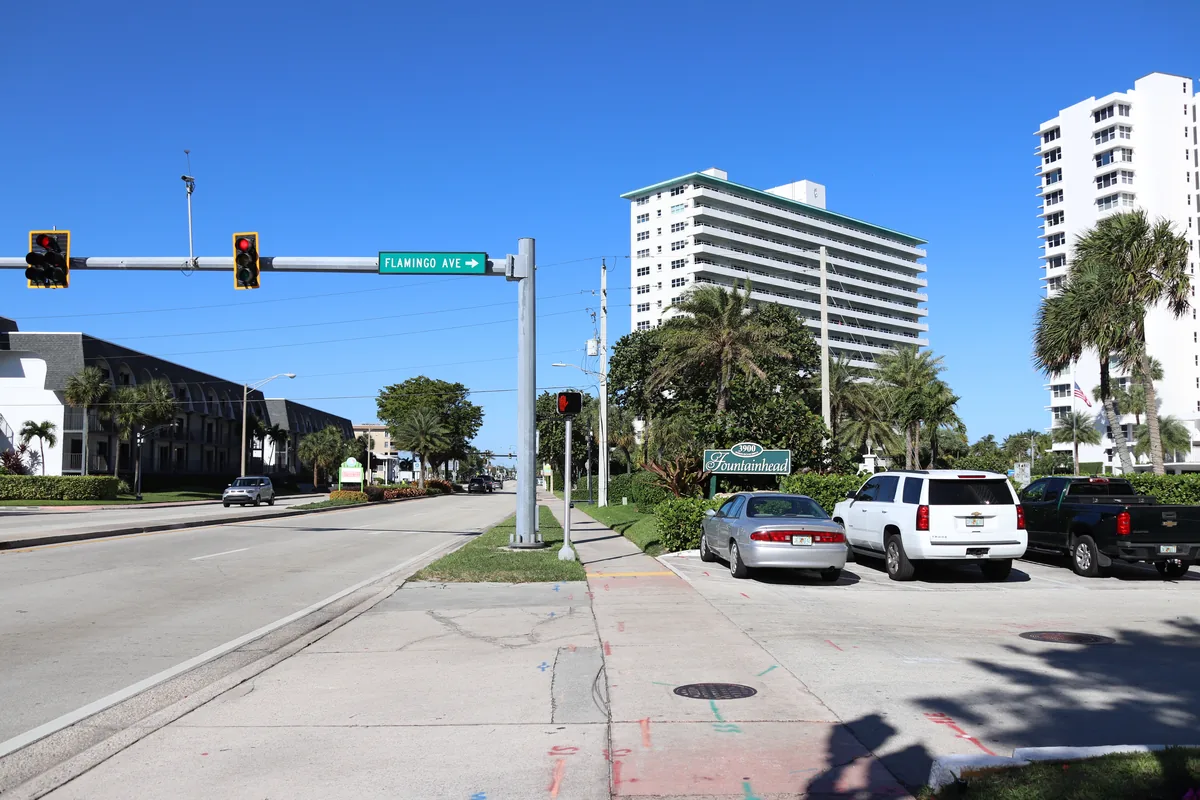
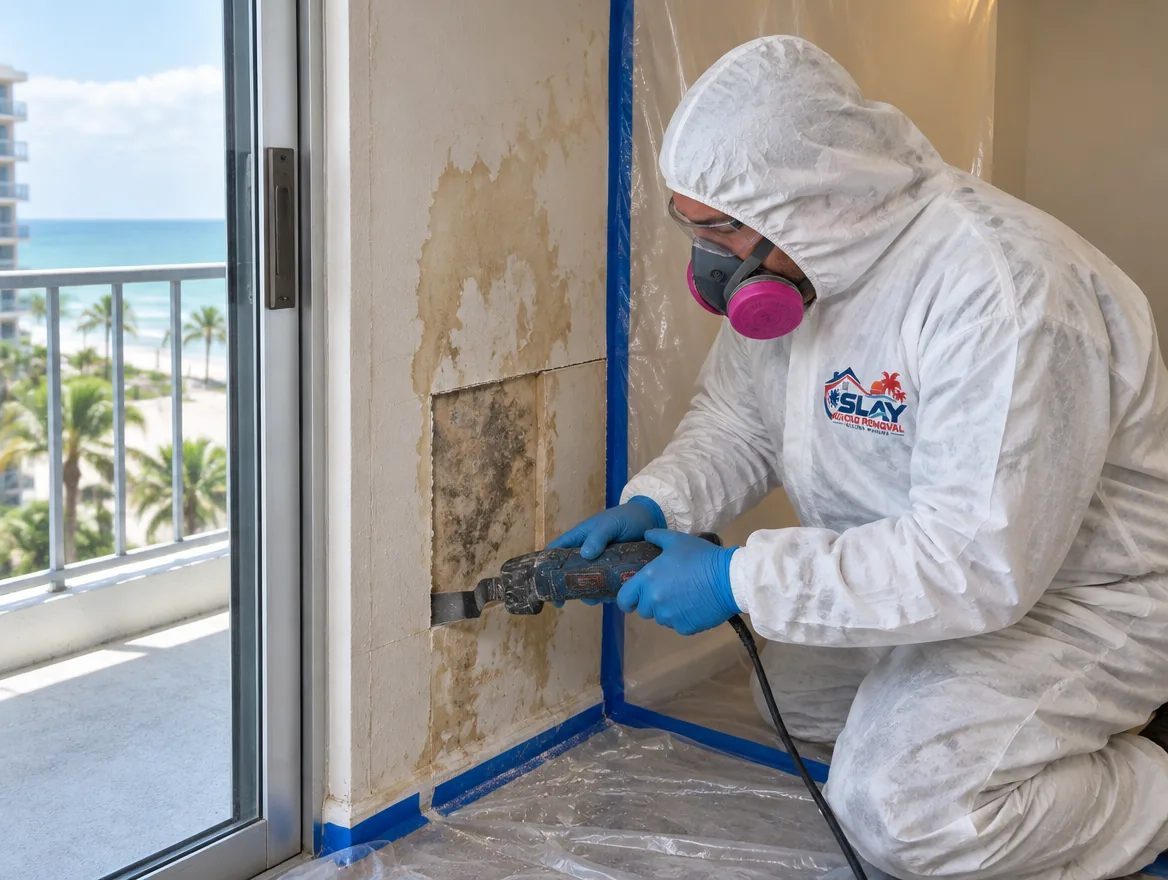
We handle mold removal in Lauderdale-by-the-Sea for condo owners and homeowners living between the ocean and the Intracoastal. Salt air, sideways rain and units that sit closed for months make this beach town its own kind of job.
Photo: Elvert Barnes, CC BY-SA 2.0, via Wikimedia Commons
Lauderdale-by-the-Sea is mostly condo buildings and older low-rise properties, many of them concrete structures that have faced the ocean for a long time. Balconies, sliding doors and window frames take a beating from onshore wind. When rain gets driven into those openings, it can soak the wall under a slider or the floor just inside, and the damage often stays hidden behind trim.
Seasonal living adds a twist. A lot of owners spend part of the year somewhere else, and a unit with the AC turned way up or off can grow mold in a few humid weeks. Coming back to a musty smell, spotted closet walls or a fuzzy sofa back is common here. We clean it up and help you set the place up to stay dry while you are away.
Use this quick tool if something seems off in your condo or beach house. Choose the closest match to see what usually causes it.
A musty smell in a unit that sat closed often means humidity built up while the AC was off or set too high. Check closets and behind furniture, then schedule Mold Remediation if the odor stays after airing out.
Dark spots near a slider or balcony door usually follow wind-driven rain getting past the frame. Dry the area, avoid scrubbing, and book Black Mold Removal so the wall and trim are opened and cleaned safely.
Ceiling stains on a top-floor unit or a small beach cottage often trace to roof or flashing leaks after a storm. Attic Mold Removal addresses the space above once the roof is sealed.
Growth near the air handler is common in condos where the unit lives in a tight closet. A clogged drain line or sweating duct is the usual cause. Leave it alone and schedule Mold Remediation for that closet.
Not sure what you are dealing with? Many coastal problems look alike at first. Call for Mold Removal and an inspection, and we will check walls, closets and the AC area.
Our mold removal service covers finding the source, containing the area and taking out growth and ruined material. Signs to watch for include a stale smell when you open the door after a trip, stained grout lines, and spotting on closet walls. In Lauderdale-by-the-Sea, closed seasonal units and salt-damaged window frames are the usual culprits. Fixing the leak or humidity issue is part of the plan, because cleaning alone will not hold up in beach air.
Remediation is the controlled version of mold work. We seal off the room, run HEPA air filtration, remove wet drywall or flooring, clean what remains and dry everything before repairs. It is the right call for larger areas and for bathroom mold behind shower walls. In condo buildings here, shared walls mean a neighbor's leak or a stack line can wet your unit, so we look beyond your own walls when tracing the cause.
Black or dark green growth often shows up along the bottom of walls near balcony doors after storm rain gets in. It can also hide under carpet that stayed damp. Because dark mold sheds spores easily when disturbed, we contain it before removal. Older concrete buildings along this coast often have aging slider tracks and frames, which let water slip in during strong onshore winds and sit where it cannot dry.
Not every unit here has an attic, but top-floor condos, converted motel units and the small houses toward the Intracoastal often do have a roof cavity above the ceiling. Mold there usually comes from flashing or roof leaks after tropical weather, or from poor venting. We clean and treat the decking, replace soaked insulation and tell you what needs fixing on the roof so the problem does not return.
Lauderdale-by-the-Sea sits on a barrier island, so ocean air is constant and it carries salt. That salt wears on window frames, door tracks and caulk faster than it would inland. Pair that with the long hot wet season from late spring through October and you get openings that leak just when the rain is heaviest.
Strong onshore winds push rain sideways into balconies and sliders. Tropical systems make it worse, and storm surge or very high tides can bring water up near the lowest floors close to the shore. Any of that water that gets into drywall dries slowly in this humidity.
Lauderdale-by-the-Sea homes
The town is dominated by oceanfront and near-beach condominium buildings, plus low-rise former motels that now serve as residences. On the west side toward the Intracoastal you will find small single-family homes.
Many buildings are older concrete structures. Their shared walls let leaks travel between units, their balconies can let water into the slab edge, and seasonal owners may leave units shut for long stretches. Moisture can sit unnoticed in those conditions, which is exactly how mold gets a head start.
Before repairing storm or balcony damage, it helps to check with the Town of Lauderdale-by-the-Sea, which shares building, permitting and storm preparation information for residents. Some repairs to windows, doors or drywall may need town approval, so plan them alongside the mold work.
Serving Lauderdale-by-the-Sea
We come out to Lauderdale-by-the-Sea from Wilton Manors, a short drive west of the beach. Condo owners, seasonal residents and homeowners can schedule Mold Removal, Mold Remediation, Black Mold Removal and Attic Mold Removal, and bathroom mold is handled as part of remediation. Call (754) 239-5777 to describe the problem, or request an estimate and we will reach out to plan a visit.
These are the ZIP codes that cover Lauderdale-by-the-Sea. Neighbors just outside them can call too.
3330833062
Our business address
Slay Mold Removal is based at a Wilton Manors business address, and we travel east to the beach for work here. The map shows Lauderdale-by-the-Sea, not a branch of ours.
Business address: 1881 NE 26th St Wilton Manors, FL 33305
Lauderdale-by-the-Sea mold removal questions
I came back to my Lauderdale-by-the-Sea condo after the summer and it smells musty. Is that mold?
Often it is. A closed unit with the AC off or set high can build enough humidity for mold in closets, on furniture and behind headboards. Open the unit, run the AC, and if the smell lingers, have it inspected.
Why does mold keep showing up near my balcony slider?
Wind-driven rain gets past worn tracks, frames or caulk and soaks the wall or floor just inside. Salt air speeds up that wear on the coast. The frame needs sealing or repair, and the wet material behind the trim needs removal.
Can a leak from the unit above cause mold in my condo here?
Yes. In older concrete buildings in Lauderdale-by-the-Sea, water can move through shared walls, ceilings and plumbing stacks. Report it to your association and the neighbor, and document stains with photos before cleanup.
What AC setting helps prevent mold while I am away?
Many coastal owners leave the AC running at a moderate setting rather than turning it off, so the system keeps pulling humidity out. A dehumidifier and a working condensate drain help too. Ask an HVAC pro what fits your unit.
Does salt air cause mold?
Salt itself does not grow mold, but it wears down seals, caulk and metal frames. That lets rain inside more easily, and the trapped moisture is what mold needs. Checking seals regularly reduces the risk.