How to Tell If It's Really Black Mold
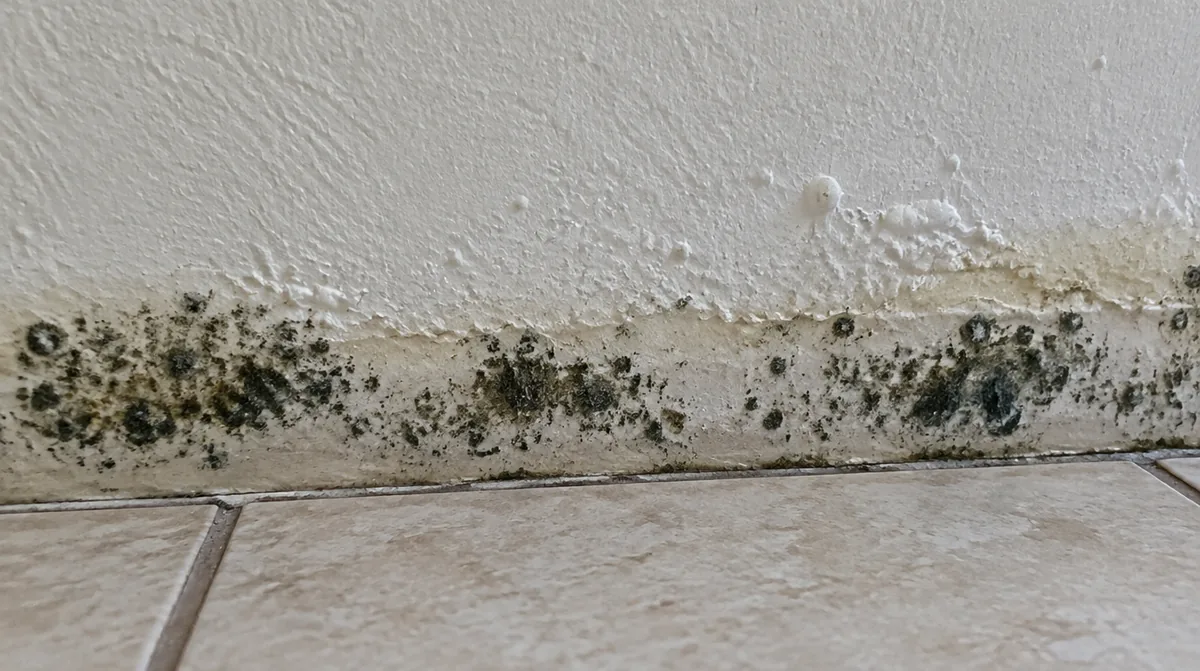
The phrase "black mold" usually refers to one species, Stachybotrys chartarum. The trouble is that many molds look black, dark green or grey. Spotting a dark patch on your wall does not tell you which one you have.
This article explains what you can learn by looking, what you can't and when it makes sense to have a sample tested.
Why Colour Is a Poor Guide
Mold colour depends on the species, its age, the material it grows on and how much moisture is around. Common household molds such as Cladosporium and Aspergillus can show up as dark spots that look much like Stachybotrys to the naked eye.
The reverse is also true. Stachybotrys can look greenish or almost grey early on. So two patches that look identical may be very different organisms, and two that look different may be the same.
Clues That Point Toward Stachybotrys
No clue is proof, but a few conditions make Stachybotrys more likely.
Long-term wetness
This species needs material that stays soaked for a while. It is often found where water sat for days or weeks, like behind a slow leak or under flooded carpet.
Cellulose-rich material
It favours paper and wood fibre. The paper face of drywall, ceiling tile and cardboard are classic places for it.
Texture
When wet it tends to look slimy or tar-like. When it dries out it can turn powdery. Fuzzy, light growth on a bathroom ceiling is less typical of it.
Why the Species Matters Less Than You Think
Here is the practical point many people miss. Health guidance from public agencies treats indoor mold as something to remove no matter what kind it is. The cleanup method is driven by the size of the area, the materials involved and the moisture source, not the name of the species.
That means a large patch of any mold on drywall still calls for containment and removal of the affected board. A small patch on tile can often be cleaned. Knowing it is Stachybotrys rarely changes the plan.
When Testing Is Worth It
Sampling has real uses. It just isn't needed every time.
- You smell mold but can't find it. Air sampling can suggest hidden growth inside a wall or ceiling.
- Someone in the home has health concerns and a doctor wants more information.
- You are buying or selling a home and need documentation.
- You want to confirm a cleanup worked. Post-remediation sampling compares indoor results to outdoor air.
In Florida, mold assessment is a licensed activity separate from remediation, so testing is often done by an independent assessor.
Why home test kits disappoint
Settle-plate kits sold in stores almost always grow something, because mold spores are everywhere outdoors and drift indoors. A positive plate does not tell you whether you have a problem or where it is.
What to Do Right Now
- Don't scrub or scrape a large dark patch. That throws spores into the air.
- Look for the water. Check plumbing, the AC closet, nearby windows and the ceiling above.
- Keep the room's door closed and limit time spent there.
- Get the area inspected so the size and cause are clear.
If the growth covers more than a small spot or keeps coming back, read about our black mold removal work to see how affected materials are handled safely. Persistent dark mold in showers and around tubs is covered there as well.
Other Things That Look Like Mold
Not every dark mark on a wall is growing. Before you worry about species, rule out these look-alikes.
- Soot or candle smoke leaves grey smudges above vents, outlets and along ceiling lines. It wipes off as dry dust.
- Dirt tracking shows up as lines where air leaks through gaps, sometimes called ghosting.
- Water stains are brown or tan rings with no fuzzy texture.
- Mildew on grout is real mold, but surface level and usually easy to clean.
A simple check is to dab a cotton swab with a little diluted bleach on a tiny spot. Mold often lightens quickly, while dirt does not. Treat this as a hint, not a test, and don't use it on a large patch.
Health Questions Belong With a Doctor
Many people search for black mold because they or a family member feel unwell. Mold of any kind can trigger allergy symptoms, irritate airways and worsen asthma. If someone in your home has ongoing symptoms, talk to a doctor and mention the mold. They can decide whether any testing of the person, not just the house, makes sense.
Bathrooms Are a Special Case
Dark spots around tubs, shower corners and caulk lines are very common in humid homes. Most of it is surface growth fed by daily steam. Replacing old caulk and running the exhaust fan longer often solves it. Growth that comes back through new caulk can mean water is getting behind the tile.