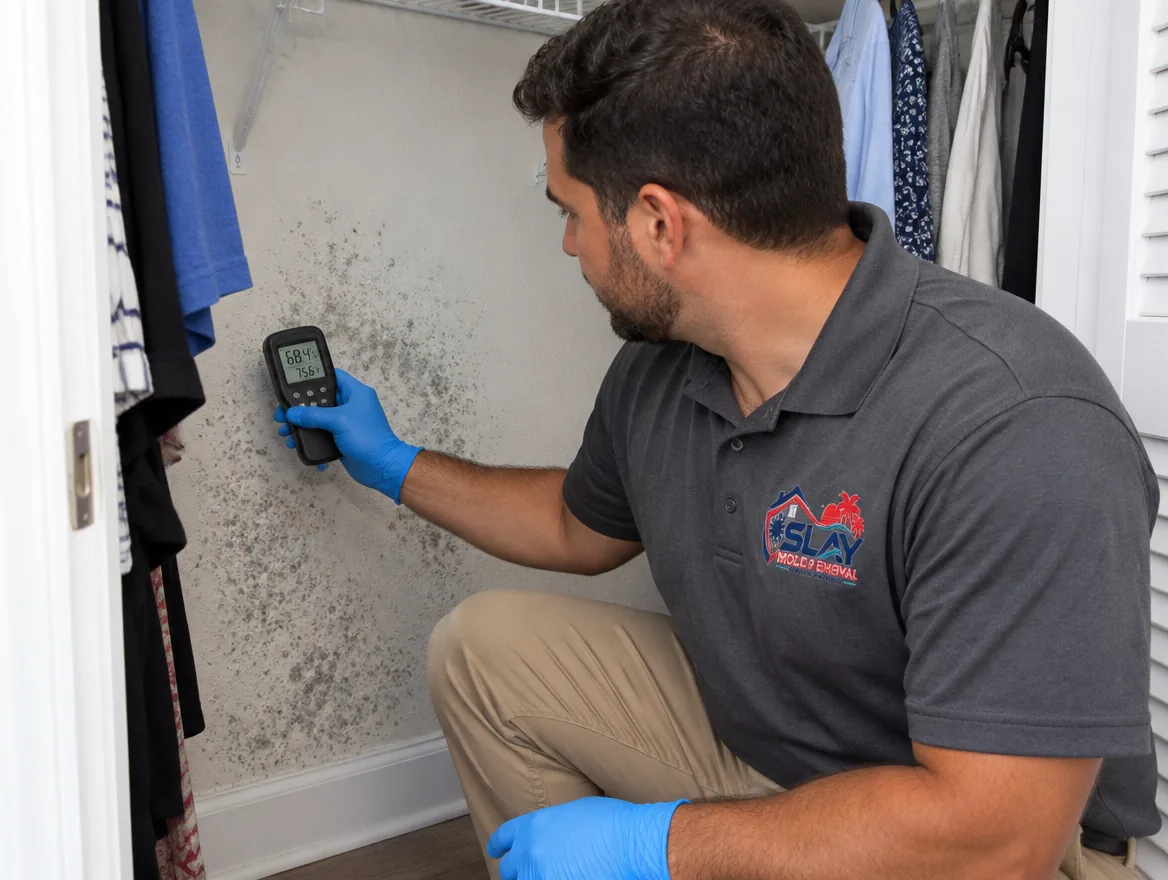
Our mold removal in Coconut Creek is built around how people live here, in planned communities, condos and homes that sometimes sit closed up for months. Slay Mold Removal finds the moisture and clears the growth.
Coconut Creek is green and wet in a good way. Tree canopy shades whole neighbourhoods, and lakes and retention ponds sit behind many streets. All of that keeps outdoor air damp, and humid air finds its way inside through doors, attics and ducts.
The bigger mold risk here is often an empty home. Plenty of condos and villas sit unused for part of the year while owners travel. If the thermostat is set too high, or the power trips during a storm, humidity builds with nobody around to notice. Owners come back to a musty smell, spotted closet walls or a fuzzy film on furniture. Catching that early keeps cleanup smaller.
Use the quick tool below. Tap the problem closest to yours to see what usually causes it and what to do first.
A musty smell you cannot see the source of is common in units that were shut up for a while. Check closets, the backs of furniture and under sinks. If nothing turns up, the growth may be inside ducts or a wall.
Dark marks after a leak mean the water lingered. In stacked condo bathrooms, that leak may come from above. Stop the water if you can, close the room off and have the soaked material assessed for removal.
Stains under the attic can come from a roof leak, but in villas and townhomes they also come from AC ducts sweating overhead. Look for drips during humid afternoons. An attic inspection checks the decking and insulation.
Growth near the air handler often grows from a blocked drain line, especially after the system sat idle. In buildings with shared duct runs, mention it to your association too. Have the unit and closet inspected before any cleaning.
If you are not sure, start with when you first noticed something. Coming home after time away is a strong clue. An inspection measures humidity and moisture to show whether mold is active.
Mold removal is the core service: locate the growth, contain the space, take out what cannot be saved and clean the rest. Watch for musty closets, spots on ceilings and stained grout. In Coconut Creek, homes that sit closed during part of the year are a frequent case. Humidity rises slowly when the air conditioning is set too high, and the first sign is often a smell when owners return.
Remediation goes further, with containment, air scrubbing, removal, cleaning, drying and a fix for the cause. It suits widespread growth and bathrooms with chronic moisture, including walls behind showers and vanities. In Coconut Creek's larger condominium communities, stacked bathrooms and shared ductwork mean one problem can touch several homes, so remediation here often starts with mapping where moisture travels.
Dark, dense patches usually point to material that stayed wet for a long stretch, such as drywall below a leaking upstairs toilet or cabinet floors under a dripping supply line. Colour does not tell you the species, so the area is treated carefully. It is sealed, the damaged pieces come out, and the space is cleaned and dried. Coconut Creek condo owners should check walls under upstairs bathrooms.
Attic mold forms on decking, rafters and insulation when moisture gets trapped overhead. Signs include darkened plywood, damp or flattened insulation and a smell from ceiling vents. Coconut Creek's single-family homes and townhomes often have AC ducts in the attic that sweat in humid weather, and long rainy spells can expose small roof leaks. Fixing ventilation, duct insulation or the leak is part of the job.
Summers in Coconut Creek are long, hot and humid, and the rainy season brings frequent thunderstorms. Lakes, ponds and thick tree cover keep the air around homes damp even between storms. During hurricane season, a tropical system can bring several days of soaking rain in a row.
Inside, those patterns hit hardest when nobody is home. A closed-up unit with the AC off or set high soaks up humidity day after day. Drywall in closets and behind furniture absorbs it first. Attic ducts sweat in the muggy air, and an AC closet with a slow drain stays wet long enough for mold to grow.
Coconut Creek homes
Coconut Creek is a planned-community city where multifamily housing outnumbers detached homes. Only about 38.43% of homes are single-unit structures. About 64.79% of occupied homes are owner occupied, which leaves a sizeable share of renters too.
That mix shapes how mold spreads and who fixes it. In large condominium communities, stacked bathrooms and shared duct runs connect units, so moisture in one home can affect another. Seasonal residents leave units empty for months, and renters may not control the building systems. Clear communication between owners, tenants and associations helps get the source fixed.
If mold repairs reach into structure or shared systems, the city is a useful resource. The City of Coconut Creek posts building and permitting information for residents, along with hurricane preparation updates that are worth reading before you leave a home empty for the season.
Serving Coconut Creek
We head up to Coconut Creek from Wilton Manors to provide mold removal, mold remediation, black mold removal and attic mold removal. Bathroom mold falls under our remediation work. Call (754) 239-5777 or request an estimate to book a visit. If you are away for the season, let us know who can give access to the unit.
We work out of Wilton Manors and drive to Coconut Creek for every visit. The map highlights Coconut Creek, and it does not mark an office.
Business address: 1881 NE 26th St Wilton Manors, FL 33305
Coconut Creek mold removal questions
I came back to my Coconut Creek condo and it smells musty. What should I check first?
Start with closets, under the sinks and the AC closet. Units left closed with the air off or set high often build up humidity, and those spots go first. If you find nothing, the growth may be in the ducts or a wall.
How can I keep my Coconut Creek home from getting mold while I am away?
Leave the air conditioning running at a moderate setting rather than off, and have someone check the unit after big storms or power outages. Clearing the AC drain line before you leave also helps.
Who pays when mold comes from an upstairs unit?
That depends on your association documents and insurance, which we cannot advise on. What we can do is help trace where the moisture came from and document what we find, so you have clear information for those conversations.
Can mold spread through shared ductwork in Coconut Creek buildings?
Spores can travel through air systems, and moisture in shared duct runs can support growth. If several units notice a smell at the same time, the building's system is worth checking along with each unit.
How do I book an inspection in Coconut Creek?
Call (754) 239-5777 or request an estimate online. Tell us what you noticed and whether the home was empty for a while. We will schedule an inspection and explain what we find.