Keeping an Attic Dry After a Roof Leak
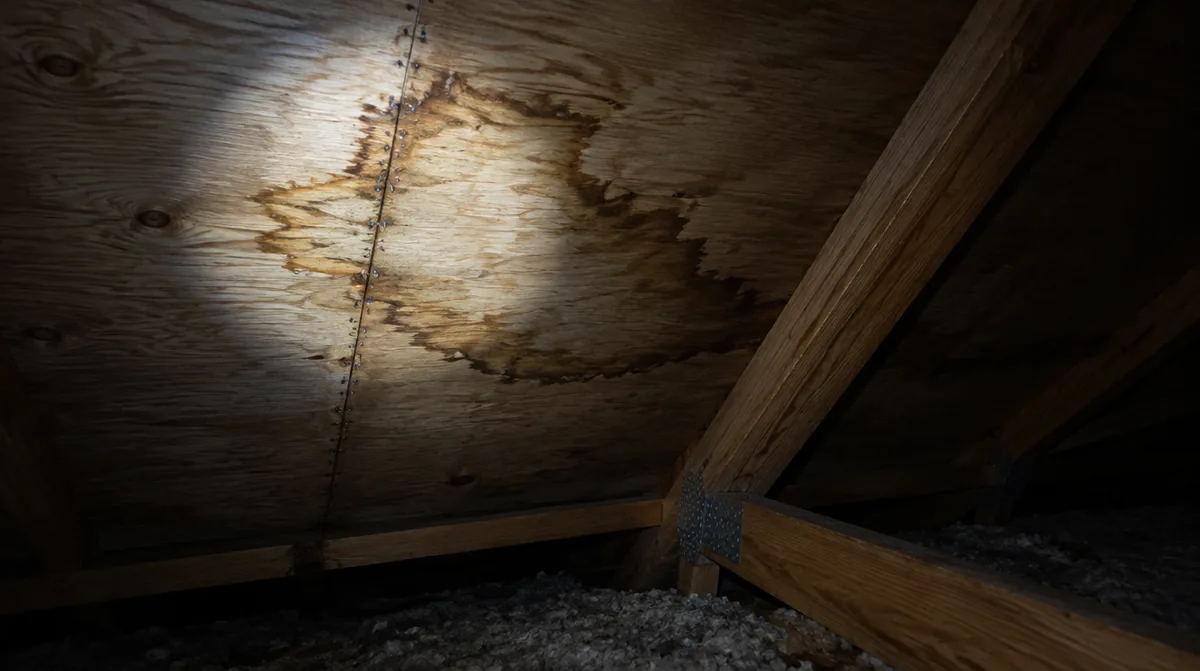
Once a roofer seals a leak, it's tempting to forget about it. But the attic below may still hold damp plywood, soaked insulation and humid air. Those leftovers are exactly what attic mold needs.
A little follow-up in the weeks after a leak can save you from a much bigger job later.
Check the Attic Within a Few Days
Don't wait for a stain on the ceiling. Go up with a flashlight soon after the repair, or have someone do it for you. Look at the underside of the roof deck around where the leak was.
- Dark rings or streaks on the plywood show where water ran.
- Soft or delaminating sheathing means it stayed wet for a while.
- Clumped or matted insulation is holding water against the ceiling drywall.
- White, grey or black specks on the wood can be early growth.
Take photos. They help the roofer, your insurer or a mold professional understand what happened.
Dry What Got Wet
Insulation
Wet fibreglass batts and blown insulation dry very slowly in a hot, humid attic. If they are soaked, they usually need to come out. Leaving them in place keeps the drywall ceiling and the framing damp.
Sheathing and rafters
Wood can dry if air reaches it. Fans and a dehumidifier aimed at the wet area speed things up. If the plywood is badly stained, soft or already growing mold, it may need cleaning or replacing.
Make Sure the Attic Can Breathe
A well-vented attic dries itself faster. Many South Florida homes rely on soffit vents at the eaves and ridge or roof vents near the top. Air comes in low and leaves high.
Problems start when that flow is blocked. Look for:
- Insulation pushed into the soffit area, covering intake vents
- Painted-over or clogged soffit screens
- Bathroom or dryer vents that end in the attic instead of outdoors
- Gaps around ceiling fixtures that let humid indoor air rise into the attic
Fixing these gives you a drier attic all year, not just after a leak.
Watch the AC Equipment in the Attic
Some homes have an air handler or ductwork in the attic. Cold ducts sweat in hot attic air, and a cracked drain pan can soak the ceiling just like a roof leak. While you are up there, check that duct insulation is intact and the pan under the unit is dry.
Follow Up After the Next Storm
A roof repair proves itself in heavy rain. After the next big storm, look again at the same spot. A dry deck means the patch is holding. Fresh moisture means water is getting in somewhere nearby, often around flashing, vents or a valley.
Many homeowners make a habit of a quick attic look at the start and end of the rainy season.
When to Call for Help
Small surface spots on dry wood may be manageable. Larger patches, a musty smell drifting into the house or growth on several rafters is another matter. Disturbing it in a cramped, hot space spreads spores and is hard on your lungs.
Our page on attic mold removal explains how sheathing and framing are treated and how to schedule an inspection. You can also request service directly if you have already spotted growth.
Signs the Leak Reached the Rooms Below
Water that soaks attic insulation often ends up on the ceiling drywall. Inside the house, look for:
- Yellow or brown rings on the ceiling
- Sagging or bubbling paint near light fixtures
- Small cracks along drywall seams that weren't there before
- A musty smell in a bedroom or hallway closet
A ceiling that held water for days may need to be opened up even after the roof is fixed. Drywall that stays damp from above can grow mold on its back side where you can't see it.
What to Tell Your Roofer
Roofers focus on the outside. Give them what you saw from inside so the repair targets the right spot. Point out where the stains were on the deck, which direction water ran and whether it got worse during wind-driven rain. Ask them to check flashing around vents, skylights and wall junctions, since those are frequent sources.
Insurance and Records
Keep your photos, roofer invoices and any moisture readings together. If mold shows up later, records showing a quick response help explain what happened. Check your policy for how it treats water damage and mold, since coverage varies a lot.
Don't Seal a Wet Attic
Some homeowners want to spray foam or add insulation right after a leak. Wait until everything is dry and clean. Covering damp wood traps the moisture and hides any growth that starts.