Mold Remediation in Wilton Manors, FL
Mold remediation in Wilton Manors starts with finding the moisture, then removing the growth without spreading spores through the rest of your home.
Book Inspection(754) 239-5777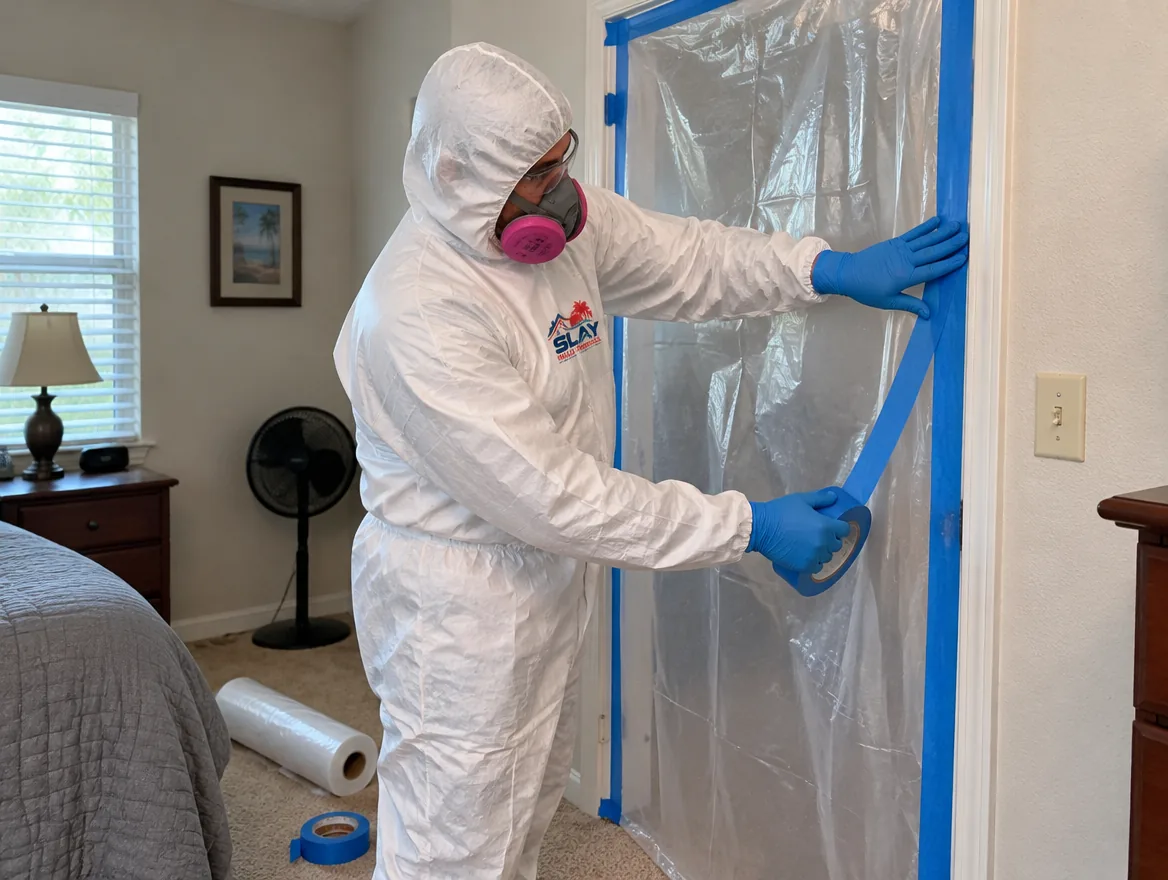
What mold remediation in Wilton Manors really involves
Remediation is more than wiping a stain off a wall. It means sealing off the affected area, removing materials that cannot be cleaned, cleaning what can be saved, and drying the space so growth does not return. Skip any of those steps and the problem usually comes back.
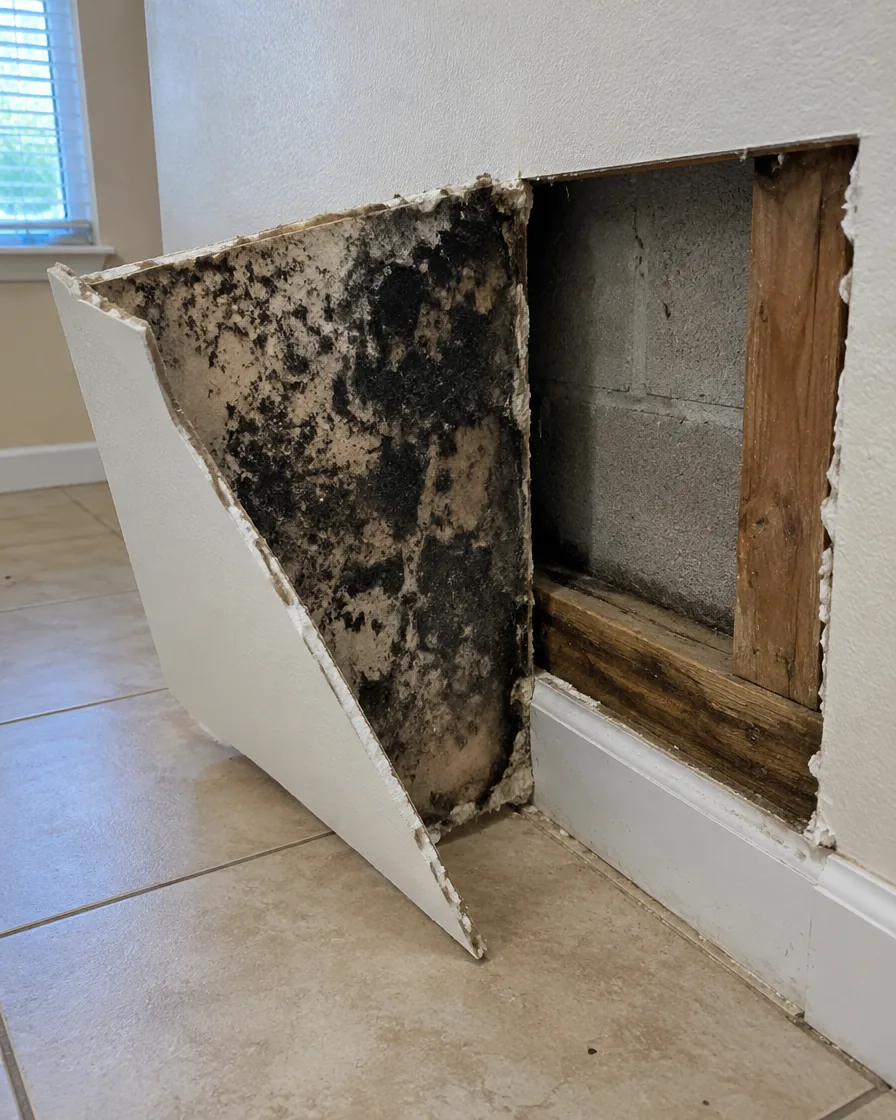
Homes here face steady humidity, long rainy seasons and storms that push water where it should not go. Many houses are concrete block with drywall on furring strips, and that gap behind the wall is a common hiding spot. A good job looks there, not only at what you can see.
Signs you need remediation, not a quick wipe
Stains that return after cleaning are the clearest sign. So is a musty smell that gets stronger when the AC cycles off, or paint that bubbles and peels along the bottom of a wall. Look for soft baseboards, warped laminate near a bathroom or kitchen, and dark spotting on the back of cabinet panels. If the growth covers more than a small patch, or you keep finding new spots in different rooms, the source is likely bigger than the surface you can reach.
What usually causes it in local homes
Mold needs moisture, food and time. In South Florida the moisture often comes from slow plumbing leaks, AC condensate lines that back up, roof or window leaks during heavy rain, and indoor humidity that stays high when the system is oversized or set too low. Drywall paper, wood framing, carpet pad and dust all give it food. A small leak behind a vanity can feed growth for months before anyone sees it on the visible side of the wall.
Deciding on mold remediation
How the problem is assessed
An assessment starts with a walk-through and questions about leaks, storms and smells. Moisture meters show where walls and floors are wetter than they should be. A thermal camera can point to cool, damp areas worth checking. Sometimes a small inspection hole behind a baseboard tells more than any tool. Air or surface sampling can help in some cases, but the main goal is to find the water source and map how far the damage reaches before any work begins.
When cleaning and drying is enough
Hard, non-porous surfaces like tile, glass, metal and sealed concrete can usually be cleaned and kept. Framing with light surface growth can often be cleaned with HEPA vacuuming and wiping, then dried and treated. This works when the wood is still solid and the moisture source has been fixed. The key is drying the area fully afterward. Cleaning damp material only resets the clock, so a dehumidifier and moisture readings are part of the repair.
When materials have to come out
Porous materials with growth inside them usually have to be removed. That includes drywall with mold on the back side, wet insulation, carpet pad and ceiling tiles. Particleboard cabinet bases that have swollen from water rarely clean up well either. Removal is done inside containment, with materials bagged before they leave the work area. Once the space is clean and dry, the opening is ready for the drywall, trim or flooring to be put back.
What affects the cost
The size of the affected area matters most, along with how many rooms or levels are involved. Hidden growth inside walls takes more labor than surface growth on a ceiling. Containment needs, the amount of material that must be removed, and how long drying takes all play a part. Access counts too, since a tight condo closet is different from an open garage. Fixing the moisture source, such as a plumbing repair, is usually a separate cost.
Safety during the work
Disturbing mold releases spores, so the work area is sealed with plastic sheeting and kept under negative air pressure with a HEPA air scrubber. Workers wear respirators, gloves and disposable suits. The HVAC system serving the area is usually shut off or sealed so spores do not travel through the ducts. People with asthma, allergies or weak immune systems may want to stay out of the home while removal is underway and ask a doctor about any concerns.
Bathroom mold removal
Bathrooms get more moisture than any other room, and in a humid climate they rarely dry out on their own. Grout and caulk lines, the ceiling above the shower and the wall behind the toilet are the usual trouble spots. Surface growth on tile and grout can often be cleaned. Mold that keeps coming back through the caulk or shows up on the ceiling paint often points to a weak exhaust fan, a slow leak at a valve or drain, or failed waterproofing behind the tile. We look at the cause, remove damaged drywall where needed, and clean and dry the space so it stays clear.
Our mold remediation process
Find the moisture
We trace where the water is coming from with moisture readings and a close look at plumbing, AC lines, windows and roof edges.
Set up containment
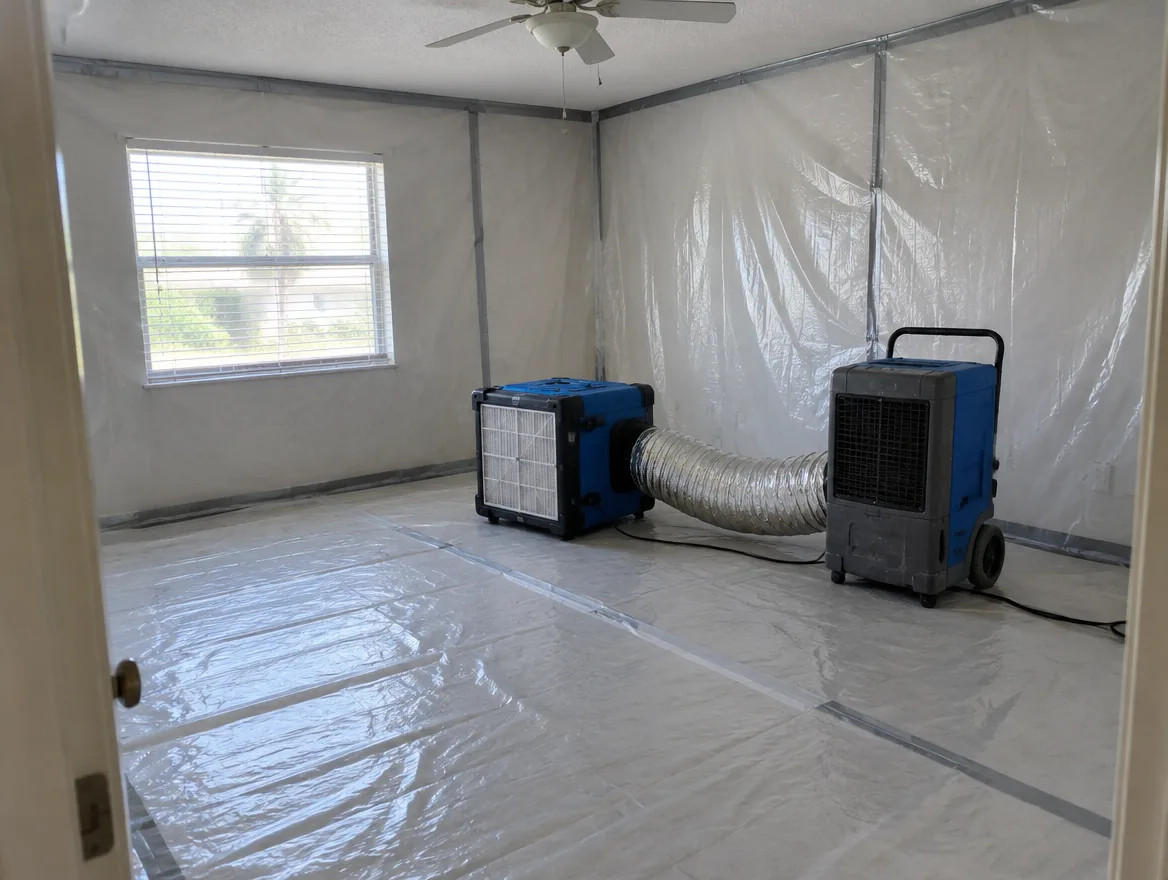
The work area is sealed with plastic, and a HEPA air scrubber keeps the air moving out of the space instead of into the rest of the house.
Remove and clean
Damaged porous materials are cut out and bagged. Remaining surfaces are HEPA vacuumed and wiped down.
Dry the area
Dehumidifiers and air movers bring materials back to normal moisture levels, checked with a meter.
Final check
We do a visual check and moisture readings before containment comes down, and explain what to watch for going forward.
Mold Remediation questions
- How long does mold remediation take?
- Most jobs take a few days from setup to final check, but it depends on the size of the area and how wet the materials are. Drying often takes longer than the removal itself, since materials must reach normal moisture levels before the space is closed back up.
- Can I stay home during mold remediation?
- Often yes, as long as the work area is sealed off and you can use the rest of the house. If the affected area is large, near bedrooms, or someone in the home has breathing problems, staying elsewhere for part of the job may be the better choice.
- Will remediation fix the leak that caused the mold?
- Remediation removes the growth and dries the area, but the water source has to be fixed too. A plumbing leak may need a plumber and a roof leak a roofer. We point out the source we find so it can be repaired before the space is closed up.
- Do I need to remove my belongings before work starts?
- Clear the affected room of items you can move easily, like clothes, décor and small furniture. Large pieces can usually be covered or moved within the house. Anything stored inside a moldy closet or cabinet should be checked before it goes back.
Containment and air filtration, step by step
Industry guidance, including the IICRC S520 standard and EPA mold remediation guidance, treats containment as a basic part of the job. The idea is simple. Keep spores and dust inside the work area so the rest of the house stays clean.
Containment usually means plastic sheeting taped from floor to ceiling, with a zippered doorway for entry. Inside, a HEPA air filtration unit pulls air out of the work area and filters it. Because more air leaves the space than comes in, the room sits at slightly lower pressure than the rest of the house. That is negative air pressure. If there is a small gap in the plastic, air flows in rather than out.
The size of the setup depends on how much growth there is. A small patch behind a vanity may need only a simple enclosure. A larger area spread across walls and ceilings calls for a fuller barrier and longer filtration.
Drying and fixing the moisture
Drying is its own step, not something that happens on the way out the door. Once damaged materials are removed, the framing and block behind them often still hold water. Dehumidifiers and air movers run until meter readings match dry areas of the house.
The moisture source has to be corrected too. That might mean a plumber repairing a supply line, an AC tech clearing a drain, or a roofer sealing flashing. In Wilton Manors, where humid air slows drying, closing a wall too early is one of the most common reasons mold returns. Rebuilding waits until the area is confirmed dry.
Talk to us about mold remediation
Tell us what you are seeing and where. Call (754) 239-5777 or request service online to schedule an inspection.