Attic Mold Removal in Wilton Manors, FL
Attic mold removal in Wilton Manors deals with a space most people never look at, where heat, humidity and roof leaks meet bare wood.
Book Inspection(754) 239-5777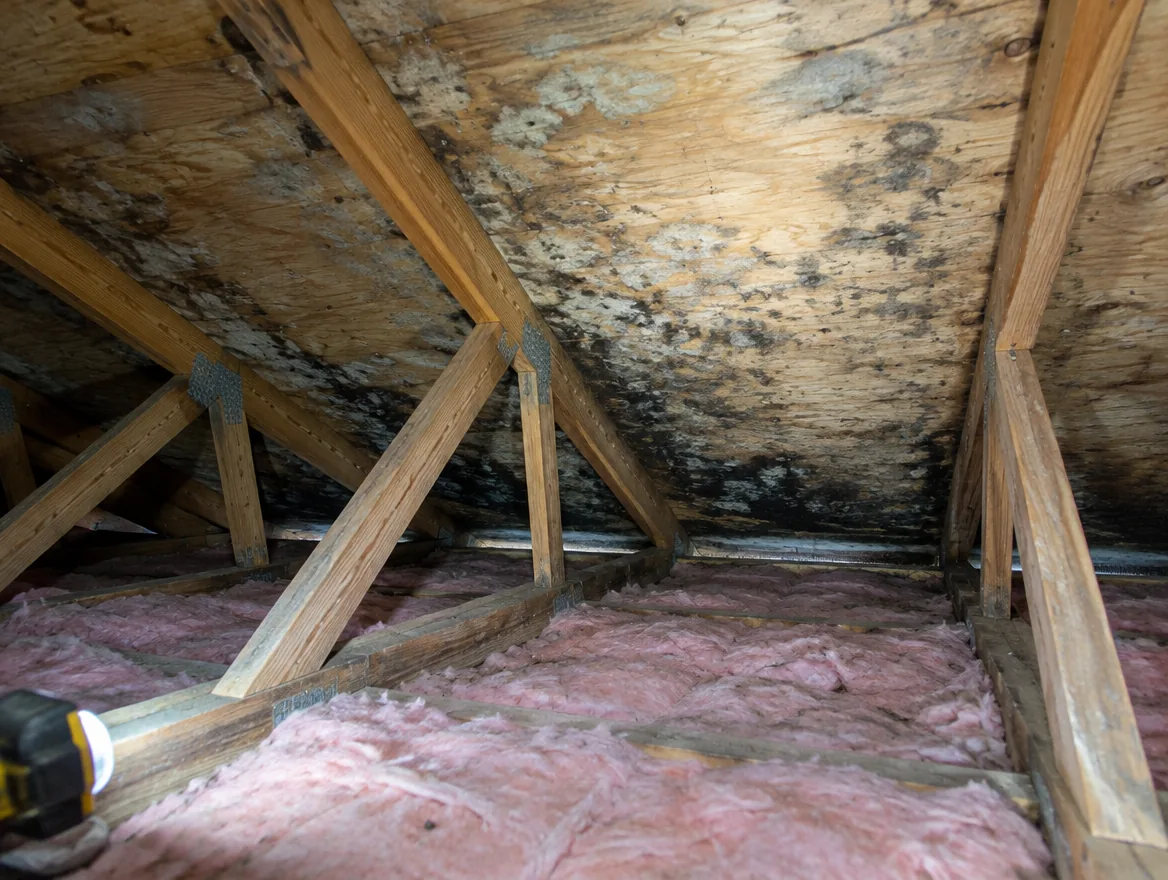
Attic mold in Wilton Manors homes
Attics in South Florida run hot and humid for much of the year. When warm, moist air hits the underside of the roof deck, or when wind-driven rain gets past flashing, the plywood and trusses can stay damp long enough for mold to grow. It often shows up as gray or black staining on the sheathing.
Many local homes have low-slope roofs and tight attic spaces, so the problem can go unnoticed until a smell reaches the rooms below or a roofer spots it. Removal means cleaning the wood, dealing with the moisture source and making sure the attic can breathe.
Signs of mold in the attic
The most common sign is dark spotting or a gray haze on the underside of the roof sheathing, often heavier near the eaves or around vents. You might notice a musty smell in upstairs closets or near the attic hatch. Damp or matted insulation, rusty nail tips poking through the deck, and water stains on ceiling drywall below are other clues. After a storm, look for drips or wet spots on the attic floor.
What causes attic mold here
Roof leaks from damaged shingles, tiles or flashing are a frequent cause, especially after heavy rain and tropical storms. Poor ventilation lets hot, humid air sit against the wood. Bathroom and kitchen fans that vent into the attic instead of outside add a steady supply of moisture. AC ductwork and air handlers in the attic can also sweat or leak condensate when they are not sealed or insulated well.
Deciding on attic mold removal
How the attic is inspected
We check the roof deck, trusses, insulation and any equipment in the attic with a flashlight and moisture meter. Wet wood near a vent, valley or penetration usually points to a roof leak. Even staining across the whole deck points more toward ventilation or humidity. We also look at where the exhaust fans end, how the soffit and roof vents are working, and whether the AC lines and ducts are sweating or dripping.
Cleaning the roof deck and framing
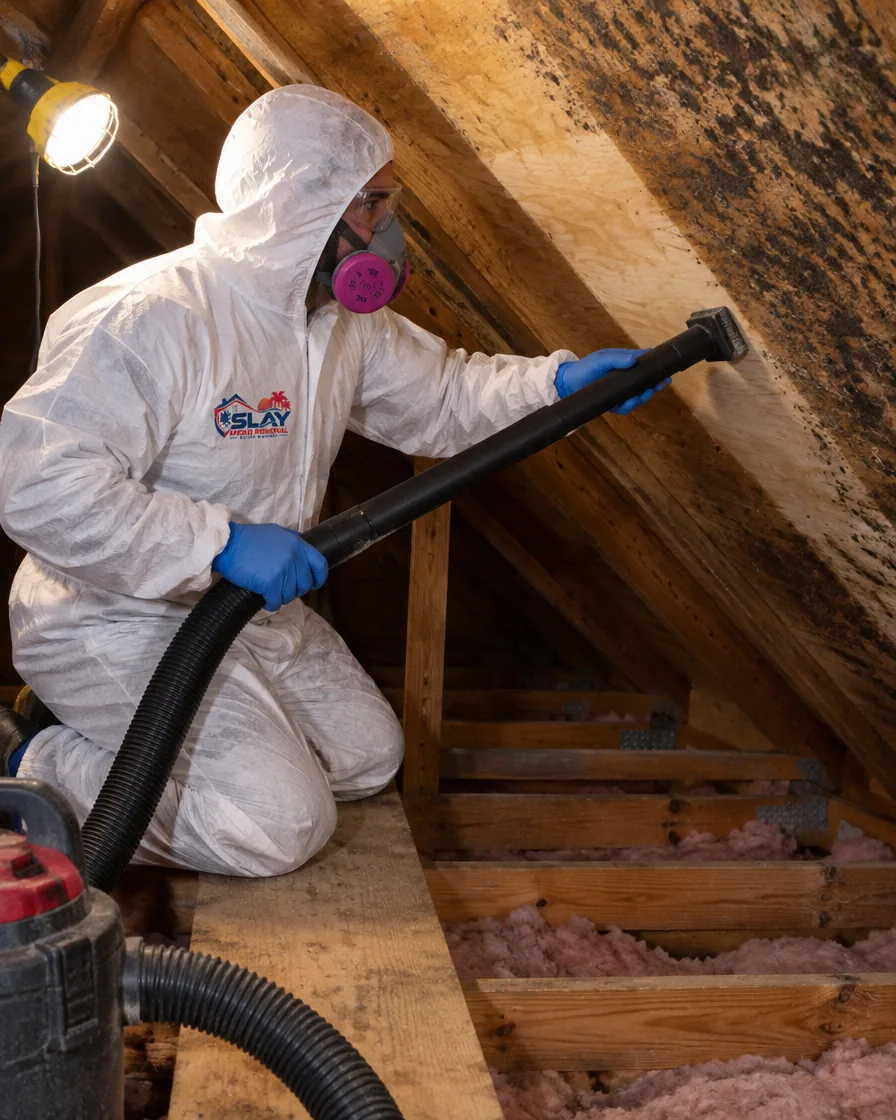
When the sheathing and trusses are still solid, the wood can usually be cleaned rather than replaced. That means HEPA vacuuming loose growth and dust, then wiping or treating the surfaces to remove what remains. The attic is kept under negative air pressure so spores do not fall into the rooms below. Once clean, the wood is dried and checked before any new insulation goes back down.
When insulation or decking must be replaced
Insulation that is wet or has mold growing in it usually has to come out, since it cannot be cleaned. Roof sheathing that has softened or delaminated from long-term leaking needs a roofer to replace it, often as part of a roof repair. We remove contaminated insulation in bags or with a vacuum system, clean the area underneath, and leave the attic ready for new insulation once the moisture problem is fixed.
What shapes the cost of attic work
The amount of roof deck affected and the size of the attic set the base of the job. Low clearance and tight framing slow the work, and heat limits how long a crew can work up there during the day. Whether insulation has to be removed adds labor and disposal. Fixes to ventilation, exhaust fans or the roof itself are separate items that may need other trades.
Working safely in a hot attic
Florida attics can get extremely hot during the day, so attic work is planned for cooler hours when possible, with breaks and water. Workers wear respirators and protective suits, and step only on framing or boards laid across it so no one comes through the ceiling. The attic hatch and any openings to the living space are sealed so dust and spores stay up top.
Our attic mold removal steps
Inspect the attic
We map the stained areas, take moisture readings and look for roof leaks, ventilation gaps and misrouted fans.
Protect the living space
The hatch and ceiling openings are sealed, and negative air pressure keeps dust in the attic.
Remove damaged insulation
Wet or moldy insulation is bagged or vacuumed out.
Clean the wood
Sheathing and trusses are HEPA vacuumed and treated.
Recommend moisture fixes
We explain what is causing the moisture, such as a leak or a fan vented into the attic, so it can be corrected.
Attic Mold Removal questions
- Can attic mold get into the rest of my house?
- It can. Spores travel through gaps around light fixtures, the attic hatch and leaky ductwork. If the AC air handler or ducts are in the attic, they can draw attic air into the system. Sealing those paths is part of protecting the rooms below.
- Does attic mold mean I need a new roof?
- Not usually. Most attic mold can be cleaned off the roof deck. A new roof or new sheathing is only needed when the wood is soft or rotted from long-term leaks. A roofer can assess the roof itself if a leak is part of the problem.
- Will better attic ventilation stop mold from returning?
- Ventilation helps a lot when humidity is the cause, but it will not stop mold if a roof leak or a bathroom fan venting into the attic keeps adding water. The best results come from fixing each moisture source and keeping air moving across the roof deck.
- How do I know if my bathroom fan vents into the attic?
- Look in the attic above the bathroom. The fan should connect to a duct that runs to a roof or wall vent outside. If the duct ends loose in the attic, or there is no duct at all, the fan is pushing moist air into the attic.
Ventilation and wet insulation
An attic needs a steady path for air. Soffit vents along the eaves let air in, and ridge or roof vents let it out at the top. When soffit vents get blocked by insulation, paint or debris, that flow stops and humid air sits against the roof deck.
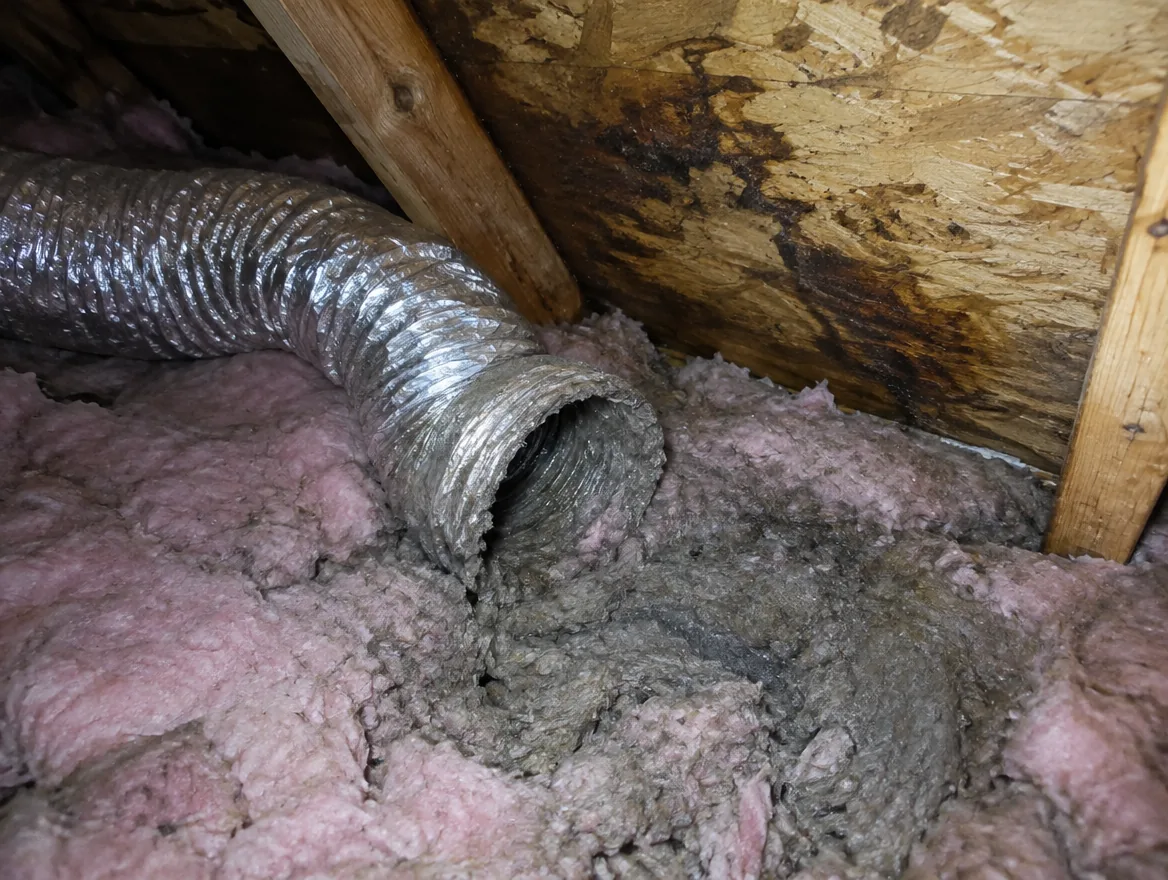
Exhaust fans make it worse when they end in the attic. A bathroom fan or a dryer vent that dumps moist air there adds water every single day. Insulation near those spots often turns damp and matted. Wet insulation loses its value, holds moisture against the wood and usually has to be replaced once the cause is fixed.
Clues you can spot from below
You do not always have to climb into the attic to suspect a problem. Yellow or brown stains on a ceiling, paint that bubbles near a light fixture, or a musty smell in an upstairs closet can all point to moisture overhead.
Many South Florida homes, including plenty in Wilton Manors, have the air handler and ducts in the attic. A sweating duct or an overflowing drain pan up there can wet the ceiling below and spread attic air through the vents. If you notice drips near a supply register or stains around the attic hatch, have the equipment checked along with the wood.
Worried about mold above your ceiling?
Call (754) 239-5777 or request service online to schedule an attic inspection.