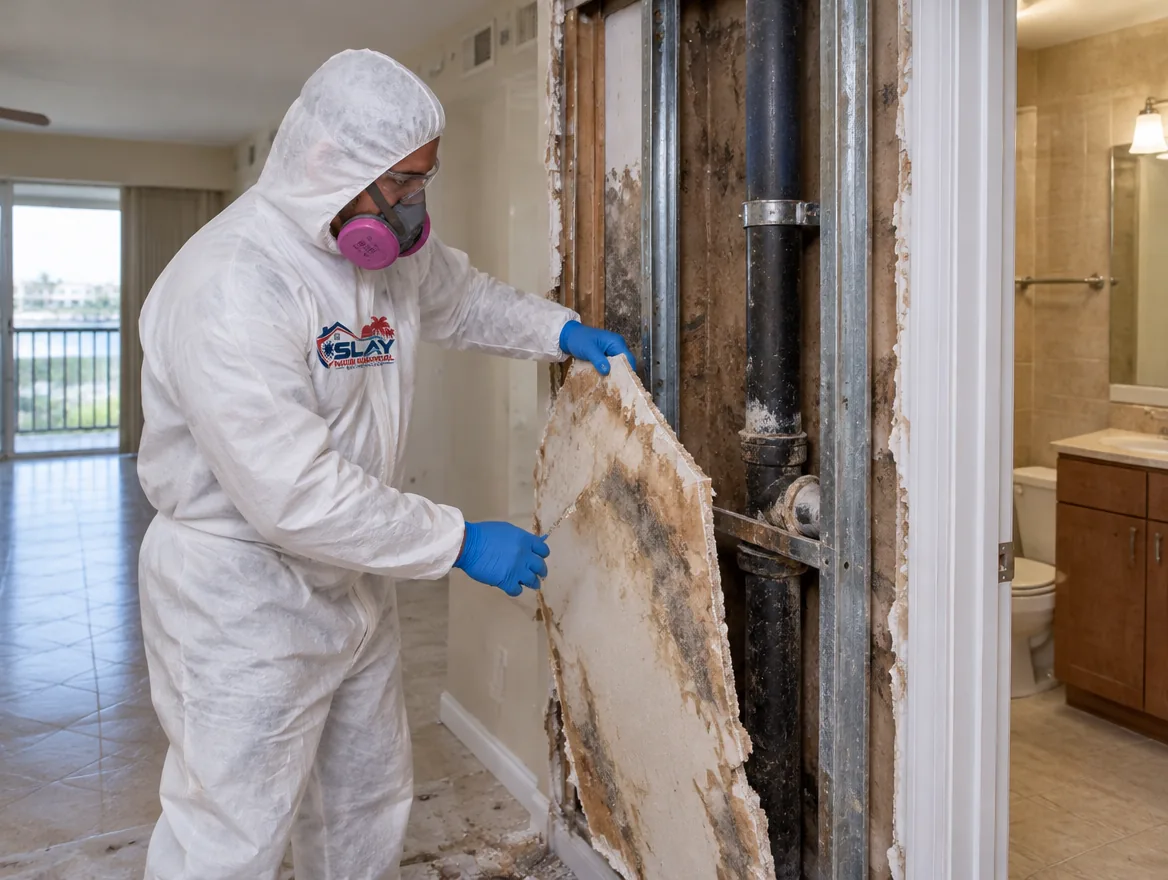
Slay Mold Removal handles mold removal in Margate for condo owners, townhome owners and families in detached houses. We find where the water is coming from first, then take the growth out.
Photo: Ianaré Sévi, CC BY-SA 3.0, via Wikimedia Commons
Margate sits a few miles inland, so it misses the salt spray but not the humidity. Air here stays heavy for most of the year. Inside a Margate home, the air conditioner does the quiet work of pulling that moisture out. When it falls behind, or a pipe sweats inside a wall, mold has an easy start on drywall paper, closet shelving and the backs of cabinets.
A lot of Margate living happens in condominium and apartment communities, where units share walls and plumbing stacks. That changes how a mold problem behaves. A slow drip upstairs can show up as a stain in your kitchen, and the source may not be in your unit at all. Good mold work here means tracing moisture across the building, not just wiping the spot you can see.
Pick the sign that matches what you are noticing at home. You will get the most likely cause and a sensible first step.
A stale smell with nothing visible often means growth inside a wall cavity, under a sink base or behind a baseboard. In shared buildings, check the wall you share with a neighbour. A moisture reading will show where to open up.
Dark spotting after a leak usually means the drywall stayed wet too long. Stop the water first, then keep people out of the room and avoid scrubbing, which spreads spores. The damaged material may need to be cut out.
A ceiling stain under the attic usually points to a roof leak, a sweating duct or a clogged AC drain line overhead. Look for wet insulation if you can do it safely, then have the attic checked for growth on the decking.
Growth around the air handler often comes from a slow condensate drain or a wet closet floor. Turn the system off if the smell is strong, and have the closet, drain pan and nearby duct connections inspected before cleaning.
If you only have a hunch, write down where and when you notice it, such as a smell after rain. That pattern helps narrow the source. An inspection can confirm whether there is active moisture and growth.
General mold removal covers finding the growth, containing the area, removing affected materials and cleaning what can be saved. Warning signs include a lingering odour, peeling paint and soft spots on drywall. In Margate, many homes are closed up and cooled hard through the long humid season, and a single missed leak can feed growth for weeks before anyone sees it. Removal only lasts if the moisture source is fixed, so that step is always part of the plan.
Remediation is the fuller process: containment, air filtration, removal, cleaning and drying, with the cause corrected so the problem does not return. It suits spread-out growth, repeat problems and bathrooms where grout, caulk and the wall behind the tub keep staying damp. Margate condo buildings with stacked bathrooms are a common setting for this, because water from one unit can travel down a wet wall into the next.
Very dark, slimy or sooty growth tends to appear on materials that stayed wet for a long time, like drywall after a plumbing leak. Colour alone does not name the species, so it is treated with care either way. The affected material is sealed off, removed and bagged, and the area is cleaned and dried. In Margate, look under kitchen sinks, behind washing machines and along walls shared with a neighbouring unit.
Attic work deals with growth on roof decking, rafters and insulation. Signs include grey or black staining on the underside of the roof, a musty smell from ceiling vents and damp insulation. Margate's detached houses and townhomes often run ductwork and AC equipment through hot attics, where cold ducts sweat in humid air. A roof leak after heavy afternoon rain is the other usual cause.
Margate's weather is muggy most of the year. The summer rainy season brings frequent afternoon downpours, and the Atlantic hurricane season adds wind-driven rain that can push water past window frames and through tired roofing. Some storms bring local flooding as well.
For a home, that means two kinds of trouble. Water gets in from outside during storms, and humid air keeps soaking everything inside. Drywall soaks it up, attics trap it under the roof, and the closet holding the air handler stays warm and damp. If the AC is undersized or the drain line clogs, indoor humidity climbs and mold can follow quickly.
Margate homes
Margate is an established suburban city with a real mix of homes. About 52.8% of homes are single-unit structures, and the rest are mostly condominiums and apartments, with roughly 3.62% being mobile homes. Around 77.16% of occupied homes are owner occupied, so most people dealing with mold here are making their own repair decisions.
The condo side of that mix matters most for mold. Older buildings share walls and plumbing stacks, so a leak in one unit can wet the walls of the units beside and below it. Mobile homes have their own weak points, with thin wall panels and floors that can trap moisture underneath.
Before any wall is opened or a damaged ceiling is replaced, it helps to know what the city expects. The City of Margate publishes building and permit information for residents, along with guidance on getting ready for storm season, which is a good place to start before repairs.
Serving Margate
We travel to Margate from our base in Wilton Manors to handle mold removal, mold remediation, black mold removal and attic mold removal. Bathroom mold is covered as part of remediation work. To set up a visit, call (754) 239-5777 or request an estimate online, and tell us what you are seeing and where. That helps us plan the inspection before we arrive.
Margate homes in these ZIP codes are part of the area we cover.
3306333065330683307333093
Our business address
Slay Mold Removal is based in Wilton Manors, and we drive out to Margate for each job. The map below shows Margate itself, not an office of ours.
Business address: 1881 NE 26th St Wilton Manors, FL 33305
Margate mold removal questions
Can mold in my Margate condo come from a neighbour's unit?
Yes, it can. Shared walls and plumbing stacks let water move between units. If your stain sits on a shared wall or under an upstairs bathroom, the source may be next door. Tracing moisture across the building is part of finding the real cause.
Why does my Margate home smell musty only when the AC runs?
That usually points to growth in the air handler, the drain pan or the ductwork near it. When the system starts, it pushes that odour through the vents. Have the AC closet and nearby ducts checked before cleaning vents, because the source is often upstream.
Should I cut out moldy drywall myself?
It is better not to. Cutting or scrubbing moldy drywall without containment can spread spores into other rooms. Small, surface spots on hard surfaces can be cleaned, but larger patches or anything inside a wall should be contained and removed properly.
Do mobile homes in Margate get mold differently?
They can. Mobile homes have thinner wall panels and a crawl space under the floor, where moisture can collect. Soft floors, a musty smell near the floor and warped panels are common signs. Checking underneath is part of a good inspection.
How do I book mold removal in Margate?
Call (754) 239-5777 or request an estimate through the site. Tell us what you are seeing, where it is and whether there was a recent leak. We will set up an inspection and explain the next steps.