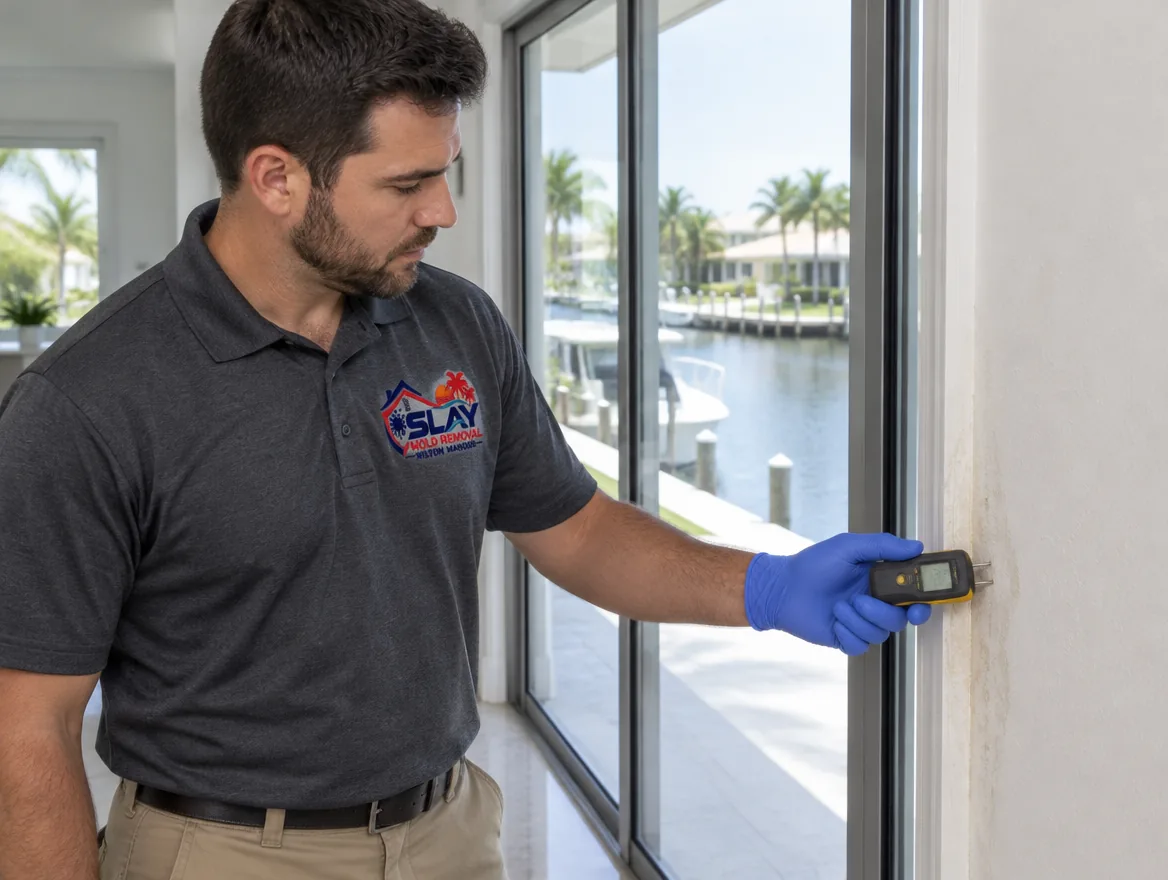
For mold removal in Lighthouse Point, start with the water. Canal-front homes and condos here face marine air and storm rain, and we track down where that moisture is getting in before any growth comes out.
Lighthouse Point is a city of canals and docks near the Hillsboro Inlet. That waterfront setting is the reason people love living here, and it is also why mold shows up. Salty, damp air reaches every side of a house. Storms drive rain sideways into window frames, sliders and stucco cracks, and seawall-side lots sit close to standing water.
Many homes here are older houses that have been remodeled, sometimes more than once. New tile, cabinets and drywall look perfect, but they can hide damp framing from an old leak that was never fully dried. A musty smell in a freshly renovated room is a clue worth taking seriously. The fix is to find the hidden wet layer, not to repaint over it.
Not sure what you are dealing with? Choose the closest match below and see what it usually means.
An odour with no visible mold often comes from behind finished walls, especially in renovated rooms or next to sliding doors. Wind-driven rain can wet the framing quietly. A moisture meter or a small inspection opening can confirm it.
Black or green spotting after a leak means materials stayed wet. Fix the leak, keep the room closed off and do not dry-brush the spots. Drywall, baseboards or cabinet backs that soaked through usually need to be removed.
Stains on the ceiling under the attic often trace back to storm damage on the roof, a loose vent boot or condensation on cold ducts. Check after the next heavy rain, then have the attic decking inspected for growth.
Mold near the air handler is often a sign of a wet drain pan, a clogged line or a closet that never dries out. Salt air can also corrode parts and cause leaks. Have it inspected before the growth reaches the ducts.
If something just feels off, keep notes on when it shows up, like after storms or when the house has been shut. Those details point to the source. An inspection then checks moisture levels and looks for hidden growth.
Mold removal means locating growth, setting up containment, taking out damaged material and cleaning what can stay. Signs include blistering paint near windows, a damp smell in closets and dark marks on grout lines. In Lighthouse Point, salty humid air and storm-driven rain wear on window seals and doors, so moisture often enters at the edges of a room. We look at those entry points before deciding what has to go.
Remediation is the complete job: contain, filter the air, remove, clean, dry and correct the cause. It fits larger spread, repeat growth and bathrooms where a shower pan or tub surround has been leaking into the wall. Canal-front homes in Lighthouse Point that were remodeled over older framing are a good fit for this approach, because the real problem is often one layer behind the new finish.
Dark, heavily stained growth usually appears where water sat for a long time, such as under a leaking slider or behind a dishwasher. We do not guess the species from colour. The area is sealed off, the soaked material is removed and bagged, and the space is cleaned and dried. Lighthouse Point homes close to the water should watch the lower walls near doors after a big storm.
Attic mold grows on roof sheathing, trusses and insulation. Look for darkened wood, matted insulation and a stale smell when the AC kicks on. Lighthouse Point roofs take a beating from tropical storms, and a small lifted shingle or tile can let water in for months. Ductwork in a hot attic also sweats in this humid air. Treatment pairs cleanup with fixing the leak or condensation.
Lighthouse Point lives with marine air. Humidity stays high all year, the wet season brings heavy rain, and tropical storms can push both wind-driven rain and storm surge toward homes along the canals. Salt in the air settles on screens, frames and outdoor equipment.
Each of those pressures shows up indoors. Rain blown against walls finds gaps around windows and sliders and soaks the drywall behind them. Salt can wear down metal parts on AC units and window hardware, which leads to small leaks. Attics under storm-worn roofs collect moisture, and closets that house the air handler stay humid when the system runs hard.
Lighthouse Point homes
Lighthouse Point is a higher-value residential city built around canal-front single-family homes, with condominium buildings mixed in. About 58.66% of homes are single-unit structures. The median owner-occupied home value is $688,400, and about 77.31% of occupied homes are owner occupied.
That combination of valuable homes and frequent remodeling matters for mold. Owners often update older waterfront houses with new finishes, and those finishes can cover framing or subfloor that never fully dried after an earlier leak. Finding that hidden moisture early protects the work that has already gone into the home.
Waterfront repairs often involve more than the inside of a wall. Lighthouse Point's city website is where residents can find building department and permit information, plus storm-readiness updates, so it is worth a look before you plan bigger repairs after water damage.
Serving Lighthouse Point
Slay Mold Removal comes out to Lighthouse Point from Wilton Manors for mold removal, mold remediation, black mold removal and attic mold removal, and bathroom mold is handled within remediation. Call (754) 239-5777 or request an estimate to set up a visit. A short description of where you see stains or smell mustiness helps us come prepared.
These are the ZIP codes we serve in and around Lighthouse Point.
3306433074
Our business address
Our business address is in Wilton Manors, and we travel north to Lighthouse Point for inspections and removal. The map marks the city of Lighthouse Point, not a branch location.
Business address: 1881 NE 26th St Wilton Manors, FL 33305
Lighthouse Point mold removal questions
Why does mold keep showing up near the sliding doors in my Lighthouse Point home?
Wind-driven rain is the usual cause. Storms push water past worn seals and thresholds, and it soaks into the drywall and baseboards beside the door. Fixing the seal or flashing, then removing the wet material, stops the cycle.
Can a remodel hide mold in a Lighthouse Point waterfront house?
Yes. If an older leak was not fully dried before new finishes went in, mold can grow behind them unseen. A musty smell in a renovated room is a common clue. Moisture readings can show where to look without tearing everything out.
Does salt air cause mold?
Salt air does not grow mold by itself, but it adds to the problem. It wears down metal window hardware and AC parts, which leads to leaks and condensation. The moisture from those leaks is what mold needs.
What should I do after a storm floods part of my Lighthouse Point property?
Remove standing water quickly, pull wet rugs and furniture out and start drying within a day or two. Drywall and insulation that soaked up floodwater usually need to be cut out. Then have the area checked for hidden moisture.
How do I schedule mold removal in Lighthouse Point?
Call (754) 239-5777 or request an estimate online. Let us know where you see the problem and whether there was a recent storm or leak. We will arrange an inspection and walk you through the options.