How Mold Gets Behind the Walls of Waterfront Homes
- Path One: Around Window and Door Openings
- Path Two: Through the Stucco and Block
- Path Three: Up From the Slab
- Path Four: Condensation From the Inside
- Finding Hidden Moisture
- Why Renovations Can Hide the Problem
- Closing the Path for Good
- Salt Air and Building Materials
- What Storm Surge Leaves Behind
- Interior Walls Are Not Immune
- Keeping Records for Waterfront Homes
Homes along canals and the Intracoastal get moisture from more directions than most. Rain blows in off open water, salt air works on seals and fasteners, and the ground under the house stays damp. When mold appears inside the wall, it usually followed one of a few predictable paths to get there.
Path One: Around Window and Door Openings
Openings are the weakest point in any wall. In a block-and-stucco house, the window sits in a rough opening sealed with caulk, flashing or a sealant joint. Over time sun, salt and movement crack those seals.
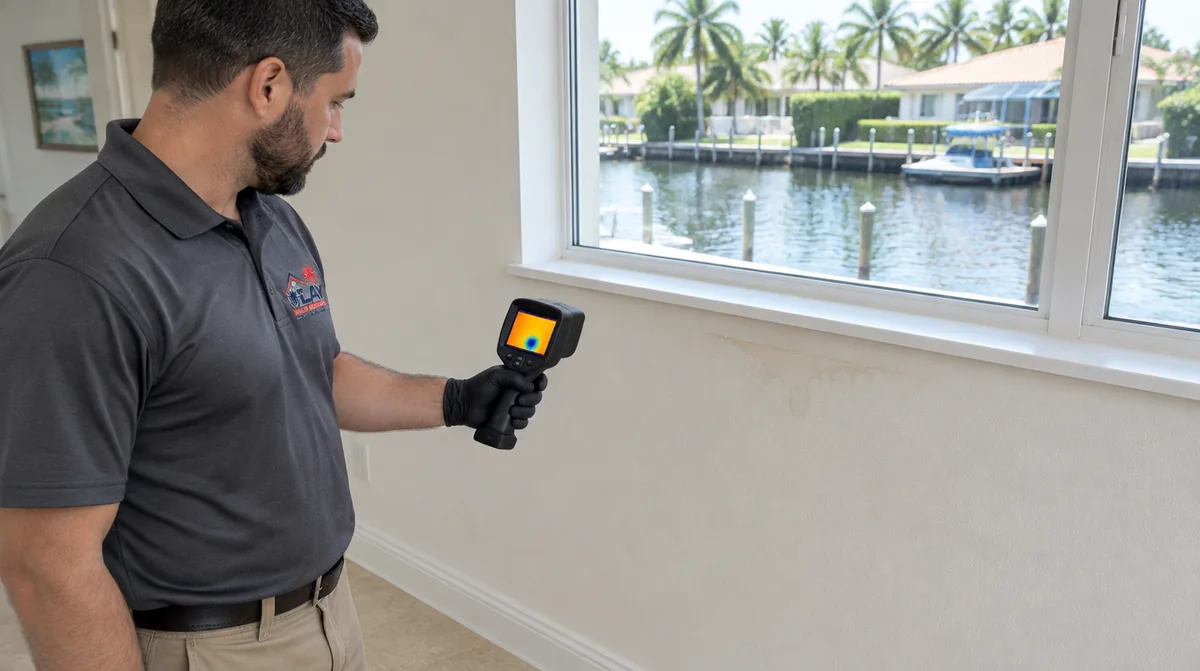
Wind-driven rain pushes water into the gap. It runs down inside the wall and pools at the sill or the bottom of the furring strips. Classic signs are stains or bubbling paint at the lower corners of windows and swelling trim below sliders.
Path Two: Through the Stucco and Block
Stucco looks solid, but it is porous. Hairline cracks let water in, and concrete block wicks it inward. Paint and elastomeric coatings slow this down until they fail.
What happens on the inside
Many older homes have drywall attached to wood furring strips on the inner face of the block. Moisture moving through the wall reaches those strips and the back of the drywall first. That is why growth can be heavy behind a wall that looks clean from the room.
Path Three: Up From the Slab
Slab-on-grade floors sit right on the soil. Near water, the soil can be damp most of the year. Without a good vapour barrier, moisture rises through the concrete. It shows up under vinyl plank or carpet, along the bottom plate of interior walls and behind baseboards.
Path Four: Condensation From the Inside
Not all moisture comes from outside. When cold AC air meets a warm wall surface, or humid indoor air meets a cold duct or window, water condenses. Vinyl wallcovering on exterior walls can trap that moisture against the drywall.
Finding Hidden Moisture
- Moisture meters read the water content of drywall and wood. Pin meters go into the surface and pinless meters scan it.
- Thermal cameras show temperature differences. Damp areas often show as cool patches, which then get confirmed with a meter.
- Small inspection openings let you see the back of the drywall and the furring without tearing out a whole wall.
- Smell is still one of the best tools. A musty odour near one wall narrows the search fast.
Why Renovations Can Hide the Problem
In Lighthouse Point, many canal-front homes have been renovated with new floors, trim and paint. Fresh finishes can cover old water stains while the moisture path stays open. If you've just bought or remodelled a waterfront home, it's worth checking the window openings and the bottom of exterior walls in the first wet season. Our page on mold removal in Lighthouse Point explains how these homes are inspected.
Closing the Path for Good
- Reseal window and door perimeters and repair flashing.
- Fix stucco cracks and recoat the exterior.
- Improve drainage and grading away from the slab.
- Keep indoor humidity steady with the AC.
- Remove moldy drywall and furring, then dry the block before rebuilding.
Removing mold without closing the moisture path just resets the clock.
Salt Air and Building Materials
Salt speeds up the wear on many parts of a house. Metal window frames and fasteners corrode. Sealants dry and crack sooner. Salt crust can clog weep holes in sliding door tracks so water has nowhere to drain except inward. In homes close to open water, these parts need checking more often than they would inland.
What Storm Surge Leaves Behind
When water rises into a house, even briefly, it soaks the bottom of walls, insulation and cabinets. Drywall wicks water upward well above the flood line. Without prompt removal and drying, mold grows inside those walls in days. After any surge or flooding, the lower section of affected walls usually has to be opened, not just dried from the outside.
Interior Walls Are Not Immune
People focus on exterior walls, but slab moisture and plumbing leaks reach interior walls too. Bathroom and kitchen walls holding supply and drain lines are common trouble spots. A slow leak at a shower valve or a sink drain can keep a wall cavity damp for months without a visible stain.
Keeping Records for Waterfront Homes
Note when windows were resealed, when the exterior was painted and when the roof was serviced. A simple log helps you plan maintenance on a schedule instead of waiting for stains to appear.