Why Mold Grows Around the AC Air Handler
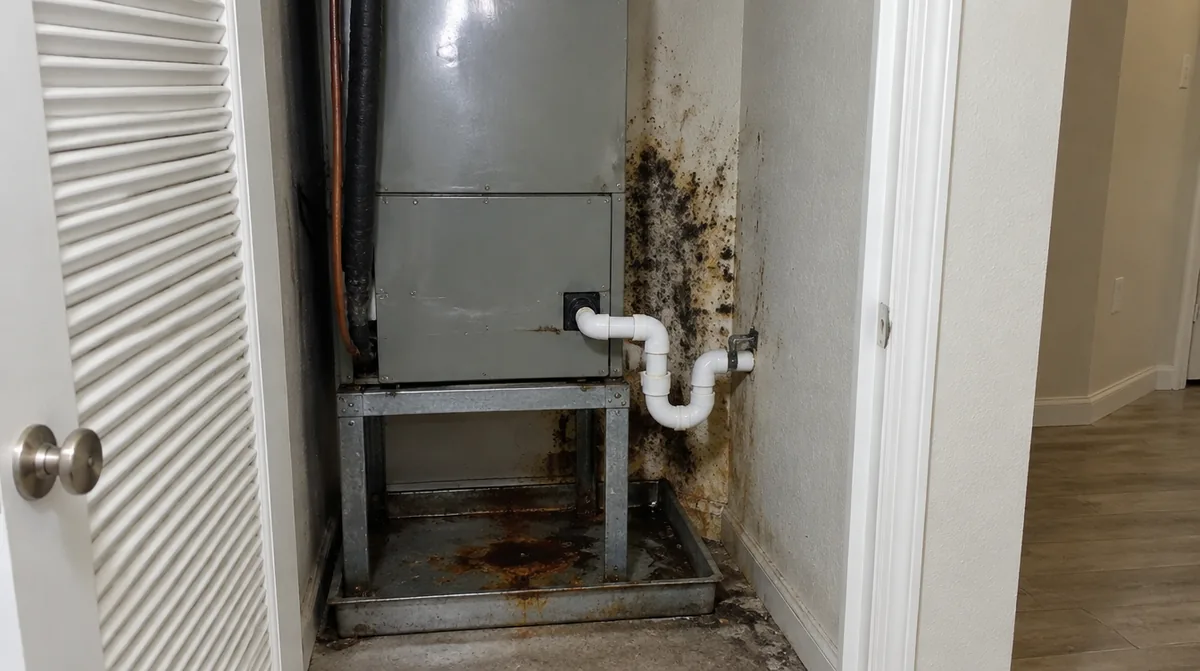
In a Florida home, the air conditioner does two jobs. It cools the air and it pulls water out of it. All of that water collects at the air handler, the indoor part of the system usually tucked into a closet, garage or attic. When anything in that setup fails, the closet becomes one of the dampest places in the house.
How the Air Handler Makes Water
Warm indoor air passes over a cold evaporator coil. Moisture condenses on the coil, drips into a drain pan and runs out through a PVC condensate line. On a humid summer day, a lot of water moves through that path.
Where Things Go Wrong
Clogged condensate line
Algae, slime and dust build up in the line. Water backs up, overflows the pan and soaks the closet floor, the wall behind the unit or the ceiling below an attic unit.
Rusted or cracked drain pan
Older metal pans corrode and leak slowly. The drip may be small, but it is steady.
A missing or tripped float switch
Many systems have a safety switch that shuts the AC off when the pan fills. If it is missing or disconnected, an overflow can go on for days.
Sweating ducts and cabinets
Cold metal in a warm, humid closet collects condensation on the outside. Gaps in duct insulation and unsealed cabinet panels drip onto nearby surfaces.
A closet that pulls in humid air
Return air closets with louvred doors draw air from the house. If that air is humid or the closet leaks to the attic or garage, the space stays damp.
Signs to Watch For
- A musty smell when the AC kicks on
- Water or rust stains on the closet floor
- Dark spots on the drywall behind or beside the unit
- Swollen baseboards or flooring near the closet
- Black specks around supply vents
Simple Maintenance That Helps
- Change the filter on schedule so dust doesn't feed growth on the coil.
- Have the condensate line flushed and checked during routine AC service.
- Confirm a float switch is installed and working.
- Keep the closet clear of stored items so you can see the floor.
- Set the thermostat so the system runs enough to dehumidify, even when you're away.
What Margate Homes Have in Common
Margate is an established inland city with a broad mix of detached houses and condominium and apartment communities. In older condo buildings, shared walls and plumbing stacks mean an overflowing AC pan in one unit can soak a neighbour's wall too. The muggy air most of the year keeps these systems running hard. Our page on mold removal in Margate covers how this kind of growth is handled there.
When It Needs More Than Cleaning
An HVAC technician fixes the drain, pan and coil. Growth on the drywall, closet framing or flooring around the unit is a separate job. Porous material with real growth usually needs to be removed under containment. If mold is inside the ductwork, ask about duct cleaning by someone who works on HVAC systems. Our mold remediation page explains the containment side of the work.
Should You Clean It Yourself?
Wiping a little surface growth off the outside of a metal cabinet is usually fine. Wear gloves and a mask, turn off the system first and use a mild detergent. Don't spray cleaners into the coil or blower, since that can damage parts and spread growth through the ducts.
Anything beyond a light film is better left to professionals. That includes growth on the closet drywall, soaked flooring and anything inside the unit.
Is the AC Spreading Mold Through the House?
If the coil, blower or ducts have growth, the system can carry spores and odour to every room. Signs include musty smells that start when the system runs and dark specks on several vent covers. Cleaning surfaces in the rooms won't help until the source in the system is dealt with.
Sizing and Settings Matter
An oversized system cools the air quickly and shuts off before it removes much moisture. The house feels cold but clammy. A technician can check whether the system runs long enough to dehumidify and whether fan settings are working against it. Leaving the fan on constantly can blow moisture from a wet coil back into the house.
Keep the Closet Accessible
Many people use the AC closet for storage. Boxes and cleaning supplies block airflow and hide leaks. Keeping the floor clear lets you spot a problem the day it starts.