Checking for Mold After the Rainy Season
- Start Outside
- Windows and Doors
- Ceilings and Attic
- The AC System
- Closets, Cabinets and Low Spots
- Shared Walls in Attached Homes
- A Note for North Lauderdale Homeowners
- What to Do With What You Find
- The Smell Test Room by Room
- Don't Forget the Garage
- Check Your Dehumidifier and Fans
- Plan Repairs for the Dry Months
South Florida's wet season brings storms most afternoons from late spring into fall. By the time the weather turns drier, your house has spent months soaking up humidity and shrugging off heavy rain. Some of that water may not have left.
Autumn is a good time to walk through your home and look for the early signs before small damp spots turn into growth.
Start Outside
Water problems indoors often begin with something you can see from the yard.
- Gutters and downspouts that overflow or dump water against the wall
- Soil or mulch sloping toward the house instead of away
- Cracks or peeling paint on stucco and block, especially near windows
- Missing or lifted roof shingles and tiles
- Sprinklers spraying the walls
Windows and Doors
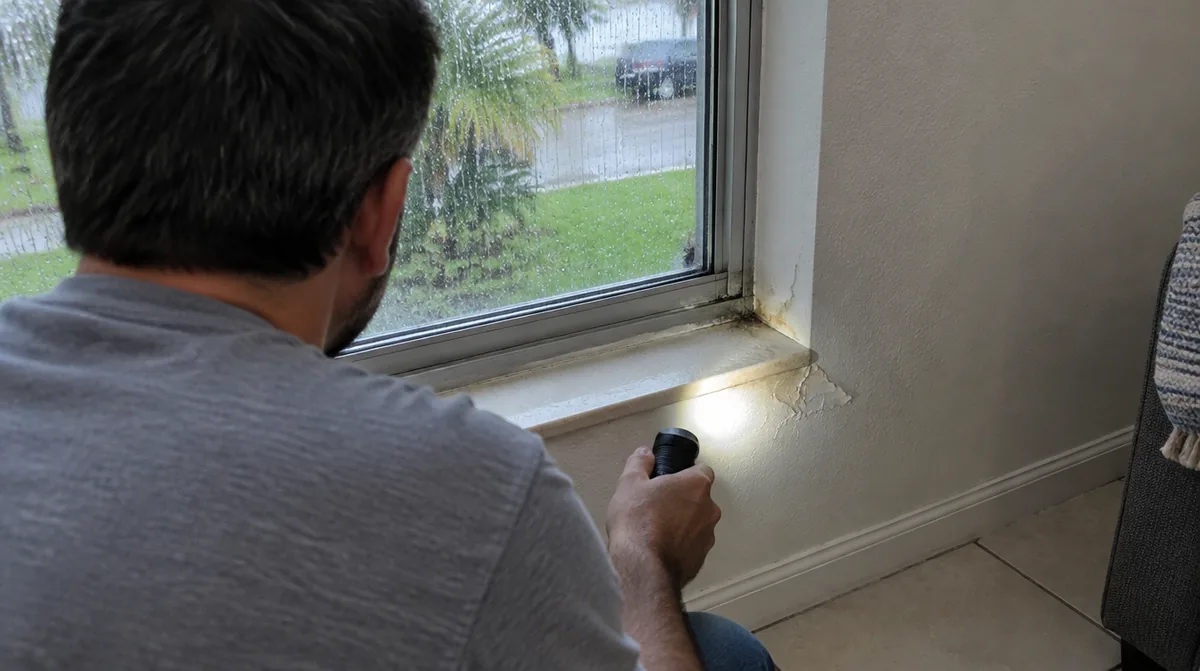
Wind-driven rain finds weak seals. Look at the bottom corners of window frames and sliding door tracks. Check drywall below them for soft spots, bubbling paint or stains. Run a finger along caulk lines. Cracked or missing caulk is an easy fix that stops a lot of water.
Ceilings and Attic
Brown rings on ceilings mean water got through at some point. Go up into the attic if it's safe and look at the underside of the roof deck where storms hit hardest. Damp insulation or dark spots on the wood need attention before next season.
The AC System
Your air conditioner worked overtime all summer pulling moisture out of the air. That water drains through a condensate line. Algae and sludge build up in it during hot months.
What to check
- Is the drain pan under the air handler dry?
- Is there water staining on the closet floor or walls?
- Does the line outdoors drip when the system runs?
- Do supply vents have dark specks around them?
Closets, Cabinets and Low Spots
Closets on outside walls and cabinets under sinks get little air movement. Open them up and smell. A musty odour is often the first sign. Check shoes, bags and boxes stored on the floor too.
Shared Walls in Attached Homes
If you live in a townhouse or condo, moisture can arrive from next door. A stain on a party wall or a ceiling below another unit deserves a quick conversation with your neighbour or association.
A Note for North Lauderdale Homeowners
North Lauderdale sits well inland, so salt air is not the issue. The full heat and humidity of the wet season is. The city's planned subdivisions of block homes, townhouse rows and large complexes often share the same age of AC equipment and drain lines, which makes the AC check above especially worth doing. Our page on mold removal in North Lauderdale explains how inspections there work.
What to Do With What You Find
- Fix the water source first, even a small one.
- Dry damp areas with fans and a dehumidifier.
- Wipe small surface spots on hard surfaces.
- Leave larger patches, soft drywall or hidden smells to a professional inspection.
Doing this walk-through once a year, right after the storms, keeps surprises to a minimum.
The Smell Test Room by Room
Your nose often finds mold before your eyes do. Walk the house in the morning after it has been closed up overnight, when odours are strongest. Pay attention to the laundry area, bathrooms, closets and the space near the AC unit. A smell that is stronger in one spot is a clue worth following.
Don't Forget the Garage
Garages are not air conditioned, so they sit at outdoor humidity all summer. Cardboard boxes, stored furniture, sports gear and old clothes are prime spots for growth. Check the wall between the garage and the house as well. Moisture there can reach the drywall on the living side.
Check Your Dehumidifier and Fans
If you use a portable dehumidifier, clean its bucket and filter. Make sure bathroom exhaust fans still pull air. Hold a tissue near the grille. If it doesn't move, the fan or its duct needs attention before next year.
Plan Repairs for the Dry Months
The cooler, drier months are the best time to fix what you find. Roofers, window installers and painters can work without daily storms. Caulk cures properly, stucco coatings bond better and dried-out walls can be closed without trapping moisture. Fixing things now means your home goes into the next wet season in better shape.
Keep a simple list of what you checked and what you fixed each year. It makes the next walk-through faster.