Clean It or Cut It Out? What to Do With Moldy Drywall
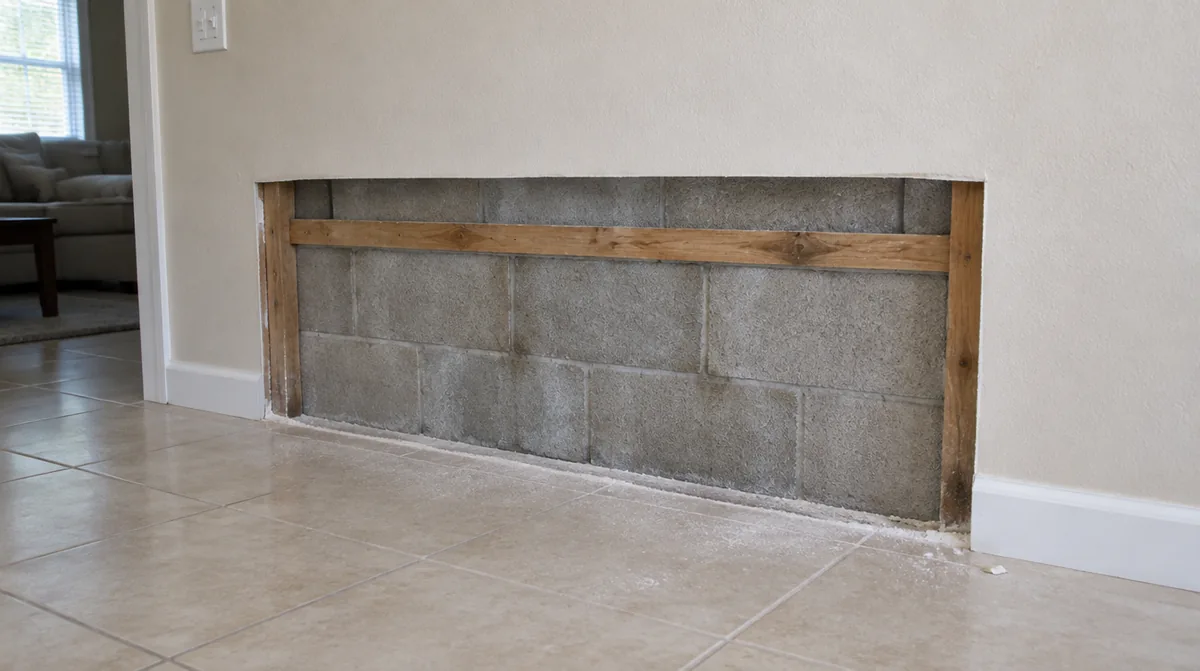
Drywall is a sandwich of gypsum between two layers of paper. That paper is food for mold. Once growth gets into it, the question is simple to ask and harder to answer: can you clean it, or does the board have to come out?
What Makes Drywall Different From Tile or Wood
Tile, glass and sealed counters are non-porous. Mold sits on the surface and can be wiped away. Drywall is porous. Roots, called hyphae, grow into the paper and sometimes into the gypsum core. Wiping the surface removes what you see but leaves the rest behind.
That's why public cleanup guidance generally says porous materials with real growth should be removed and replaced, not cleaned.
When Cleaning Can Be Enough
There are cases where drywall can stay.
- A light film of surface mold on painted drywall, often from condensation, that wipes away fully
- The board is dry and firm when pressed
- There is no staining on the back side or inside the wall
- The moisture cause, such as a steamy bathroom, has been fixed
Glossy or semi-gloss paint helps, because it slows how fast moisture and mold reach the paper.
When Drywall Should Be Cut Out
It got soaked
Drywall that sat wet from a leak or flood tends to sag, crumble or feel soft. Even if it dries, the paper has already fed growth inside the wall cavity.
Stains keep coming back
If you clean or paint over a spot and it returns, the mold is growing from within or behind the board.
The back side is moldy
Leaks inside the wall often feed growth on the hidden face of the drywall. A musty smell with no visible spots is a common sign. Opening a small inspection hole tells you a lot.
What Oakland Park Homes Often Reveal
Much of Oakland Park is mid-century block homes on slab, with drywall fastened over furring strips against the concrete. When that drywall comes off, there is usually a narrow air gap and wood strips behind it. Those strips can hold moisture from rain soaking into the block or from a slow plumbing leak.
Older supply lines, window AC units and low-slope additions are frequent water sources in this kind of housing. The long rainy season and humid nights also mean wet walls dry slowly unless you help them along. If you live there, our page on mold removal in Oakland Park covers how local homes are handled.
How Removal Is Done Safely
- The room is sealed with plastic and placed under negative air.
- Cuts are made at least a short way past the visible stain to catch hidden growth.
- Removed pieces are bagged inside the work area.
- Studs, furring strips and block are HEPA vacuumed, cleaned and dried.
- Moisture readings are checked before new board goes up.
Replacing drywall is usually the easy part. The real work is making sure everything behind it is clean and dry first.
Don't Just Paint Over It
Mold-resistant primer is useful on new board. It is not a fix for growth that is already there. Painting over active mold hides it for a while and lets the problem keep spreading inside the wall.
A Quick Way to Decide
If you're standing in front of a stained wall, these questions help sort it out.
- Press on it. Is it firm, or does it give?
- Wipe a small spot with a damp cloth. Does the stain come off completely?
- Does it smell musty when you put your nose close?
- Was there a leak or flood near it, even months ago?
- Has the spot been painted over before?
Firm, dry board with a light film that wipes off completely is a cleaning job. Any soft board, lingering smell, past leak or repainted stain points toward cutting it out and looking behind.
What About Ceilings?
Ceiling drywall follows the same rules, with one more concern. Wet ceiling board is heavy and can sag or fall. If a ceiling is bowing or dripping, stay out from under it and get it looked at soon.
Other Porous Materials Nearby
When drywall has mold, the materials touching it often do too. Baseboards made from fibreboard, carpet pad, wallpaper and cardboard boxes stored against the wall should all be checked. Solid wood trim can often be cleaned and reused, while pressed board usually swells and has to go.
After the New Board Goes Up
Keep the room at a steady temperature and humidity for the first weeks. Watch the new paint near the floor and around windows. If stains return, the moisture source wasn't fully fixed and needs another look.