Mold Assessor vs Mold Remediator in Florida
- What a Mold Assessor Does
- What a Mold Remediator Does
- Why the Roles Are Separated
- Do You Always Need Both?
- Questions to Ask Either Professional
- How This Plays Out in Coconut Creek
- What to Expect From an Assessment Report
- How Clearance Testing Works
- Landlords, Tenants and Associations
- Keep Your Paperwork Together
When you start looking for help with mold in Florida, you'll see two titles: mold assessor and mold remediator. They sound similar but they do different jobs. Florida law treats them as separate licensed activities under Part XVI of Chapter 468 of the Florida Statutes.
Understanding the split helps you hire the right person at the right time.
What a Mold Assessor Does
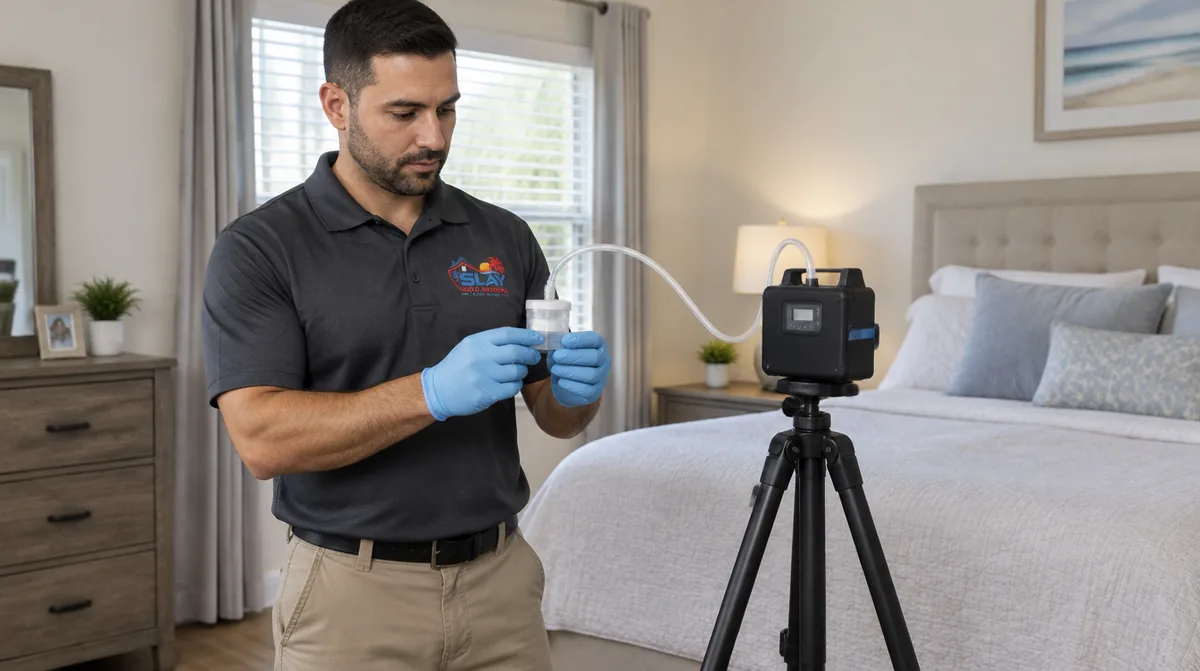
An assessor investigates. Their job is to figure out whether there is a mold problem, where it is and how big it is.
- Visual inspection of the home and likely moisture sources
- Moisture readings and sometimes thermal imaging
- Air or surface sampling sent to a lab
- A written report that may include a scope of work, the plan describing what should be removed and how
After a cleanup, an assessor can also return to do clearance testing and confirm the area meets the goals in that plan.
What a Mold Remediator Does
A remediator does the hands-on work. That includes setting up containment, running negative air, removing damaged materials, cleaning surfaces and drying the space. A good remediation plan follows the scope of work if one exists.
Why the Roles Are Separated
The idea is to avoid a conflict of interest. If the same company that finds the problem also gets paid to fix it, there's a temptation to make the problem look bigger. Florida's law generally bars one person from doing both the assessment and the remediation on the same project. You can check the details in the statute or with the state's licensing agency.
Do You Always Need Both?
Not always. Many straightforward jobs, like a small patch from a known leak, are handled with a visual inspection and the remediation itself. An independent assessment is especially useful when:
- The source or extent of the mold is unclear
- There are health concerns in the household
- An insurance claim, sale or rental dispute needs documentation
- You want independent proof the cleanup worked
Questions to Ask Either Professional
- Can you show me your current Florida license? You can verify it on the state's online lookup.
- What will your report or estimate include?
- How will you contain the work area?
- Will the moisture source be identified and addressed?
- Is clearance testing recommended, and who would do it?
How This Plays Out in Coconut Creek
Coconut Creek is a planned-community city where large condominium communities are common. In those buildings, shared ductwork, stacked bathrooms and units left empty for part of the year can make it hard to tell where mold started. An independent assessment can be helpful when an association, an owner and a neighbour all need the same facts. Our page on mold removal in Coconut Creek explains how to book an inspection there.
Whoever you hire, verify the license yourself and keep copies of every report. Clear paperwork makes the next step easier for everyone involved.
What to Expect From an Assessment Report
A useful report is more than lab numbers. It should describe where the inspector looked, what moisture readings they found, where samples were taken and what the results mean in plain language. When a scope of work is included, it should say which areas need remediation and what the cleanup should achieve.
Ask the assessor to walk you through the report. If something is unclear, ask what it means for your home in practical terms.
How Clearance Testing Works
After remediation, the assessor returns before rebuilding begins. They look for visible growth and dust, check moisture readings and may take new samples. Indoor results are often compared with an outdoor sample taken during the same visit. If the area doesn't meet the plan's goals, more cleaning is done and it is checked again.
Scheduling this step before the walls are closed matters. Once new drywall and paint go up, it's much harder to confirm what's behind them.
Landlords, Tenants and Associations
When more than one party has a stake, separate assessment gives everyone the same set of facts. A tenant, a landlord and an insurer can all read the same report. That often settles disagreements faster than competing opinions.
Keep Your Paperwork Together
Store the assessment, the remediation invoice, photos and the clearance results in one place. They're useful for insurance, resale and any future work on the same area.