Closing Up a Seasonal Home Without Coming Back to Mold
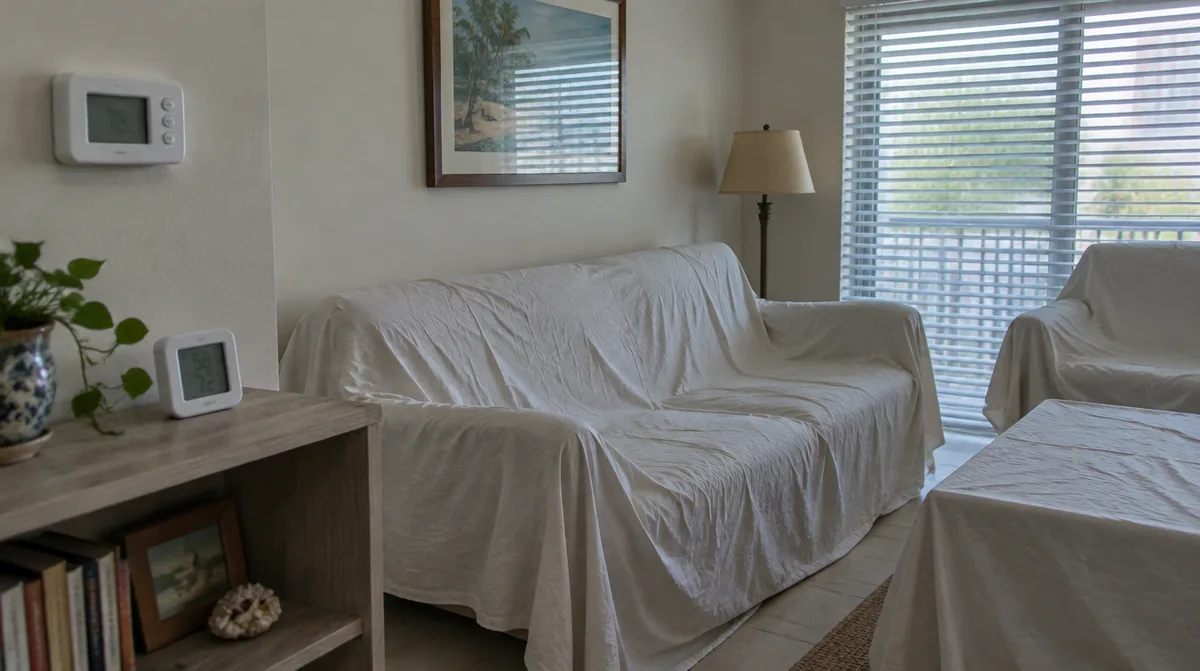
Many owners leave Florida when summer arrives. Unfortunately, summer is exactly when an empty home is most at risk. Hot, wet air seeps in, nobody is around to notice a drip, and a few weeks of high humidity can leave furniture, closets and walls spotted with mold.
The good news is that a little planning before you leave prevents most of it.
Why Empty Homes Mold So Easily
A lived-in home gets daily air movement, regular AC cycles and someone who spots problems early. A closed-up home has none of that. If the AC is turned off or set too warm, indoor humidity climbs to match the outdoors. Fabric, wood, leather and drywall soak up that moisture and start to grow mold.
Set the AC to Control Humidity
Turning the system off is the biggest mistake. Instead, leave it running at a moderate temperature so it cycles often enough to pull water from the air. Many homes do well with a dedicated humidistat or a thermostat that has a dehumidify setting.
Add a humidity monitor
A small digital hygrometer costs little and tells your caretaker exactly what the air is doing. Some connect to your phone so you can check from up north.
Before You Lock the Door
- Have the AC serviced and the condensate line flushed.
- Shut off the main water supply, or at least the washer and ice maker lines.
- Empty and prop open the refrigerator if it will be off.
- Leave interior doors, closets and cabinet doors open for air flow.
- Remove food, wet towels and anything damp.
- Pull furniture a little away from exterior walls.
- Close blinds to cut solar heat.
Arrange Regular Check-Ins
Someone should walk through the home on a regular schedule. They should check the thermostat reading, look under sinks and in the AC closet, sniff for musty smells and look at ceilings after storms. Many condo buildings and associations have rules or services for this. Give the person a simple checklist and your contact details.
Hurricane Season Adds Risk
Storms can knock out power for days, which stops the AC. Wind-driven rain can push water past windows and balconies. If a storm passes near your area, ask for a walk-through afterward instead of waiting for the next scheduled visit.
A Word for Hillsboro Beach Owners
Hillsboro Beach is a narrow barrier-island town where most homes are units in oceanfront condominium towers. Salt spray, ocean humidity and rain driven against high-rise windows and sliders make water intrusion a recurring problem. When a unit sits empty, that moisture can build without anyone noticing. Our page on mold removal in Hillsboro Beach explains how inspections there are arranged.
When You Come Back
Open the door and take a breath. A musty smell, fuzzy spots on leather or wood, or damp-feeling bedding means humidity got away. Don't run fans at it. Get the moisture down with the AC and a dehumidifier and have the growth looked at before cleaning.
Common Mistakes to Avoid
- Turning the AC off to save money. The cost of mold cleanup and ruined furniture is far higher than the power bill.
- Closing every interior door. Closed rooms get little conditioned air and stay damp.
- Covering furniture with plastic. Plastic traps moisture underneath. Breathable cotton sheets are better.
- Leaving a full laundry basket or wet beach gear. Damp fabric is an easy start for growth.
- Storing linens in sealed bins without drying them first.
Closets and Upholstery
Closets are where many returning owners first notice mold, often on leather shoes, belts and bags. Leave closet doors open, avoid packing them tight and consider moisture absorber tubs as a backup. Leather and suede furniture benefits from a light cleaning before you leave, since body oils and dust help mold take hold.
Kitchens and Bathrooms
Run the dishwasher empty with the door propped open afterward so it dries. Leave the washing machine door ajar. Pour a little water in seldom-used drains before you leave so traps don't dry out, then turn the main water off. Wipe shower walls dry and leave the curtain spread open.
Electric Power and Backups
Ask your caretaker or building to tell you if power goes out for long. A quick restart of the AC after an outage can save a lot of trouble.